Punaluu Black Sand Beach - United States
Discover the RVezy RV rental marketplace
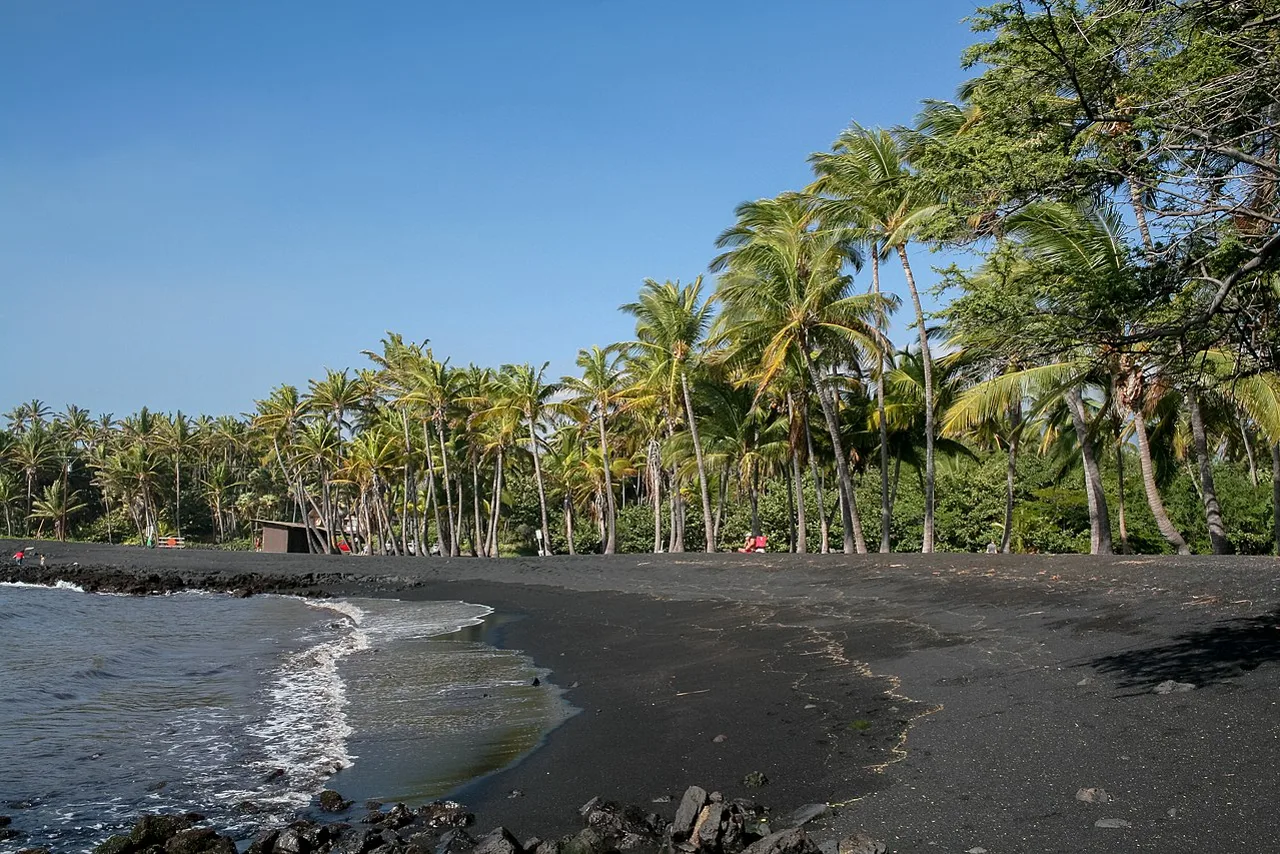
About Punaluu Black Sand Beach
RV quick facts for Punaluu Black Sand Beach
| Detail | Information |
|---|---|
| Max RV length | No posted length limit; small gravel/grass camping area better suited to vans and smaller Class C rigs |
| Full hookups | None; tent and vehicle camping only, no RV electrical or water hookups |
| Dump station | No dump station on site; nearest services are in Naʻalehu and Pāhala |
| Generator hours | Generator use restricted under county park quiet-hour rules; check current County of Hawaiʻi Parks regulations |
| Cell service | Generally available from major carriers along Highway 11; can be spotty directly at the beach |
| Road restrictions | Access via paved Highway 11 and a short park road; parking lots are compact and can fill on weekends |
| Reservation window | Camping requires a permit from the County of Hawaiʻi Department of Parks and Recreation, obtained in advance |
| Wildlife advisory | Green sea turtles (honu) frequently bask on the sand; state and federal law requires keeping at least 10 feet away |
Best time to visit Punaluu Black Sand Beach
April through early June and September through October generally offer the most comfortable weather, lower humidity, and smaller crowds than the summer and winter peaks. Winter months bring higher surf and more frequent rain showers along the Kaʻū coast, while summer sees warm, dry conditions and the busiest visitation. Shoulder seasons are ideal for RV travel because Highway 11 is less congested and nearby campgrounds at Hawaiʻi Volcanoes National Park have more availability. Trade winds help moderate temperatures year-round, so the beach is accessible in every season.
Cooler, wetter winter month; higher surf possible
Similar to January; trade winds common
Transition month with variable surf
Pleasant shoulder-season conditions
Warm and drier; good RV travel window
Start of peak summer visitation
Hot and dry; busy beach
Warmest month; hurricane season active in Pacific
Still warm, fewer crowds after Labor Day
Good shoulder-season conditions
Increasing rainfall and surf
Wetter winter conditions; high surf advisories possible
Things to do at Punaluu Black Sand Beach
- Black sand beach walk EasyRV parking available
A stroll along Punaluʻu's signature black sand beach is the primary draw for most visitors. The sand was formed when hot lava shattered on contact with seawater, and the shoreline is lined with coconut palms and lava rock. Paved parking near the beach accommodates standard vehicles and smaller RVs.
- Sea turtle viewing EasyRV parking available
Punaluʻu is one of the most reliable places on Hawaiʻi Island to see green sea turtles basking on the sand or feeding in the shallows. Visitors are required by law to stay at least 10 feet from the animals and avoid touching or flashing photos. Early morning and late afternoon often offer the best sightings.
- Picnicking at the pavilions EasyRV parking available
The park's covered pavilions and picnic tables make it a convenient meal stop on a Big Island road trip. Restrooms, outdoor showers, and potable water are available in the day-use area. Shaded tables fill quickly on weekends and holidays.
- Snorkeling in calm conditions ModerateRV parking available
On calm days, snorkelers can explore the rocky edges of the bay and observe reef fish and turtles. Conditions change quickly, and strong currents, surge, and cold freshwater springs are common, so snorkeling is recommended only for experienced swimmers. There are no lifeguards on duty.
- Tent and vehicle camping EasyRV parking available
Overnight camping is permitted in a designated area near the beach with an advance permit from the County of Hawaiʻi Department of Parks and Recreation. The site is basic, with no hookups, but offers a rare oceanfront camping experience on the Big Island. Smaller rigs and camper vans are best suited to the compact layout.
- Day trip to Hawaiʻi Volcanoes National Park EasyRV parking available
Punaluʻu sits about 30 miles southwest of the entrance to Hawaiʻi Volcanoes National Park, making it a practical base for day visits. The park offers crater views at Kīlauea, lava tube walks, and scenic drives along Chain of Craters Road. Several lots inside the national park accommodate RVs.
- South Point (Ka Lae) side trip Moderate
The southernmost point in the United States lies about 25 miles west of Punaluʻu via Highway 11 and South Point Road. The windswept cliffs, green sand beach hike at Papakōlea, and historic fishing canoe moorings are highlights. The final stretch of South Point Road is narrow and better suited to smaller vehicles, so larger RVs may prefer to park and shuttle.
- Photography and sunrise viewing EasyRV parking available
The contrast of black sand, blue water, and swaying palms makes Punaluʻu a favorite photography spot on the Kaʻū coast. Sunrise light over the bay is especially striking, and the beach is typically quiet in the early morning. Tripods and low-angle shots work well along the lava rock edges.

RV delivery to a campground
Skip the pickup. Skip the towing. Get an RV delivered and set up at your campsite so you can arrive, unpack, and start your trip stress-free.
Choose your perfect RV
Browse RVs that offer delivery to your site and book the one that fits your budget and adventure style.
Lock in your campsite
Reserve your campsite with the hookups and amenities you need. We’ll help you find RVs that meet site requirements.
Arrive and relax
Your host delivers and sets up the RV before you get there. Just show up and start enjoying your trip.
RV Rentals Punaluu Black Sand Beach
Punaluu Black Sand Beach, HI, United States
How to get to Punaluu Black Sand Beach
The park sits along Highway 11 (Hawaiʻi Belt Road) in the Kaʻū district, roughly 1 hour (about 55 miles) south of Hilo and about 1.5 to 2 hours (about 65 miles) southeast of Kailua-Kona. From Hawaiʻi Volcanoes National Park the drive is around 30 miles, or just under an hour. RV drivers should be prepared for long two-lane stretches, occasional steep grades, tight curves between Volcano and Pāhala, and limited fuel stops, so plan refueling in Naʻalehu or Pāhala. The nearest airports for fly-and-rent trips are Hilo International Airport (ITO) to the north and Ellison Onizuka Kona International Airport (KOA) to the west.
RVezy vs. Traditional RV rental
RVezy rentals
- Book directly from local RV owners
- Choose the exact RV you want
- Delivery to your campsite, home, or destination
- More variety: trailers, motorhomes, and campers
Traditional RV rental
- Limited fleet from a rental company
- Exact RV not guaranteed
- Pickup only at retail locations
- Fewer RV types and less availability