The Different Types of RV Batteries [What You Need to Know]
Posted on June 25, 2024
![The Different Types of RV Batteries [What You Need to Know]](https://ghost-cdn.rvezy.com/2024/06/Battle-Born-Batteries-copyright-Meagan-Butler.jpg)
Preparing to buy new batteries for your RV?
Our RV battery guide will provide you the information you'll need to make an informed decision about which type of RV battery will suit your needs best.
We've included a quick-battery comparison chart and the advantages and disadvantages for each battery type to make your battery-buying decision easier.
Let's get started.
Key Takeaways
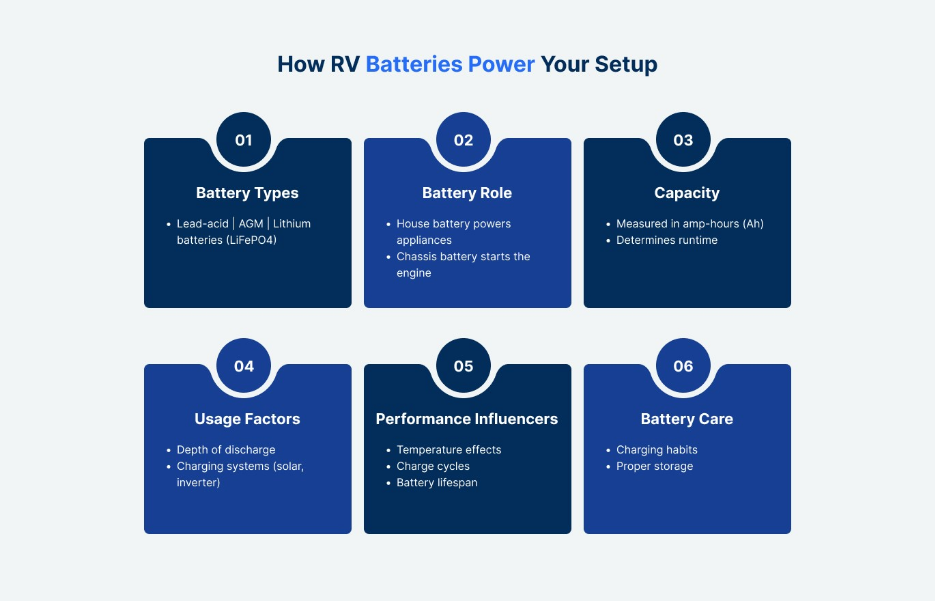
- RV battery performance depends on understanding types like traditional lead-acid and newer lithium batteries (LiFePO4) within the context explained in the blog.
- Battery capacity is measured in amp-hours (Ah), which determines how long your RV systems can run.
- Proper usage depends on factors like depth of discharge, charging habits, and temperature limits, which directly impact battery health and longevity.
- The guide compares cost, weight, lifespan, charge time, and maintenance across the main RV battery types.
- Charge time, maintenance needs, depth-of-discharge limits, and temperature restrictions vary by battery type and can significantly affect battery lifespan and RV performance.
Types of RV Batteries
When it comes time to replace or upgrade your RV battery, you have two choices: buy the same type of battery or choose a different battery to enhance your camping style.
RV batteries commonly fall into four main categories: flooded lead-acid, gel-cell sealed lead-acid, AGM sealed lead-acid, and lithium (LiFePO4). Understanding the differences between these battery types will help you determine the best RV battery choice for your RV.
Want to try out a different type of RV battery system than what you have or want to buy? Rent an RV and see if you'll need solar and lithium batteries or if you prefer to camp hooked up to shore power and only need an AGM, gel-cell, or lead-acid battery.
Quick comparison table
Lead-acid batteries
Lead-acid batteries are the most common type of RV battery. These batteries require regular maintenance and take a long time to charge. Flooded lead-acid batteries are one subtype of lead-acid batteries. They use a liquid electrolyte solution that covers the battery’s internal components, while AGM and gel batteries are sealed lead-acid variations.
Pros
- Cost: The least expensive of all RV batteries.
- Durability: Can operate in temperatures ranging from -40°F to 131°F (-40°C to 55°C).
Cons
- Weight: Heavy.
- Lifespan: 3 to 5 years with optimal use and care. If you completely drain a flooded lead-acid battery, you will damage it and shorten its lifespan.
- Maintenance: Lead-acid batteries require routine maintenance. If the water level is low, you must replace any water loss with distilled water. This type of battery is prone to spills and leaks.
- Charge time: 8 to 12 hours (from 50% to a full charge).
- Overcharging: Prone to damage from overcharging, necessitating careful monitoring during charging.
- Ventilation: The free-flowing liquid electrolyte inside the batteries requires ventilation.
- Durability: Susceptible to damage from vibration and shock.
- Mounting: Mount vertically to prevent leaks.
Lead-acid RV batteries are ideal for budget-conscious RVers who don’t mind a bit of maintenance.
Regularly check and top off the electrolyte levels with distilled water and ensure the battery is kept clean and dry to prevent corrosion. Avoid discharging the battery below 50% to extend its lifespan.
Gel-cell RV batteries
Gel-cell batteries are similar to flooded lead-acid batteries, except you don't have to maintain the battery by adding distilled water because the gel replaces the electrolyte solution.
Pros
- Cost: Less expensive than AGM or lithium batteries.
- Durability: Resistant to shock, vibration, and corrosion, and can operate in temperatures ranging from -40°F to 131°F (-40°C to 55°C).
- Lifespan: Typically 3 to 8 years with proper use and care, though some gel batteries can last longer under ideal conditions.
- Maintenance: Maintenance-free because you don't need to add distilled water to a gel-cell battery.
- Mounting: Can be mounted in any position.
Cons
- Weight: Heavier than lithium batteries.
- Charge time: 5 to 10 hours (from 50% to a full charge).
- Overcharging: Prone to overcharging.
- Ventilation: Gel-cell batteries don't require ventilation under normal conditions, but when pressure builds up, they will, especially inside an enclosed living space like an RV.
Gel-cell RV batteries are ideal for RVers who camp or store their RV in extreme temperatures and don't want to maintain their battery.
To maximize gel-cell battery lifespan, avoid regularly discharging below about 50% charge, even though gel batteries can tolerate deeper discharges occasionally.
AGM (absorbent glass mat) RV batteries
AGM batteries are a type of lead-acid battery, but they are designed differently because fiberglass mats absorb the acid, making them spill-proof and maintenance-free.
Pros
- Cost: More affordable than lithium batteries but generally more expensive than flooded lead-acid batteries.
- Durability: Highly resistant to shock, vibration, and temperature variations, making them ideal for rugged environments and off-road travel. AGM batteries can operate across a wide range of temperatures, though performance may decline in extreme heat or cold.
- Lifespan: 4 to 7 years with optimal use and care.
- Maintenance: Maintenance-free since they don't require adding water or checking electrolyte levels.
- Ventilation: Under normal conditions, they do not require ventilation, making them safer for indoor use than flooded batteries.
- Mounting: These batteries can be mounted in any position due to their sealed design.
Cons
- Weight: Heavier than lithium batteries.
- Charge time: 4 to 8 hours (from 50% to a full charge).
- Overcharging: Overcharging can damage AGMs, so it's a good idea to use a smart charger or charge controller to charge these batteries.
AGM RV batteries are ideal for RVers who need a reliable, maintenance-free power source that can handle rough conditions and various mounting positions.
To maximize AGM battery lifespan, avoid regularly discharging below about 50% charge. AGM batteries can tolerate deeper discharges occasionally, but cycle life drops significantly at very deep discharge levels.
Lithium RV batteries
Lithium-iron phosphate (LiFePO4) batteries are the newest and most advanced type of RV battery. They use lithium ions moving between electrodes to store and release energy instead of lead and acid, which makes them more efficient.
Pros
- Weight: Significantly lighter than lead-acid and AGM batteries, making them ideal for RVs where weight is a consideration.
- Lifespan: Can last up to 10 years or more with optimal use and care.
- Efficiency: High energy density and efficiency allow deeper discharge without damaging the battery.
- Charge time: 2 to 6 hours (from 50% to a full charge).
- Maintenance: Completely maintenance-free.
- Durability: Resistant to vibration and shock and can discharge in temperatures ranging from -4°F to 140°F (-20°C to 60°C). However, most LiFePO4 batteries should not be charged below 32°F (0°C) unless they include a built-in heating system.
- Safety: Built-in battery management system (BMS) to protect against overcharging, overheating, and short circuits.
- Mounting: You can safely mount lithium batteries in the most convenient and space-efficient way for your RV setup.
Cons
- Cost: The most expensive option among RV batteries.
- Initial investment: Higher upfront cost compared to lead-acid, gel-cell, and AGM batteries.
- Temperature sensitivity: Most LiFePO4 batteries cannot safely charge below 32°F (0°C) without a built-in heating system, and charging below freezing can permanently damage the battery.
- Complexity: They need specific chargers and protection systems to work safely.
Lithium RV batteries are ideal for RVers who prioritize efficiency, long lifespan, and low maintenance and are willing to invest in the best technology available. Because of their high efficiency and deep discharge capabilities, they are particularly suitable for boondocking and off-grid adventures.
Avoid completely discharging your lithium batteries to maximize their lifespan and performance. LiFePO4 batteries can safely use much more of their capacity than lead-acid batteries, often allowing 80–90% depth of discharge. Keeping the battery above roughly 10–20% charge can still help maximize long-term lifespan.
Frequently asked questions
What is a deep-cycle battery?
A deep-cycle battery provides a steady amount of power over a long period. It can be discharged and recharged repeatedly, making it ideal for RVs, which need consistent power for appliances and devices. Most RV batteries are deep-cycle.
What happens when an RV battery drops below charge?
When an RV battery drops below a certain charge level, it can lead to reduced efficiency and a shorter lifespan. Consistently discharging a battery below this level can damage it and cause failure. It’s important to recharge your battery before it gets too low.
How do you dispose of an RV battery?
RV batteries must be disposed of properly due to the hazardous materials they contain. Take your old batteries to a recycling center or a designated battery disposal site. Many auto parts stores and service centers also accept old batteries for recycling.
Are all of the batteries sold in both the United States and Canada?
Yes, most RV batteries are available in both the United States and Canada. However, availability can vary by brand and model, so it’s best to check with your local retailer or supplier.
What is a trickle charger?
A trickle charger is a device that charges a battery at a very low, steady rate. It is designed to maintain a battery’s charge over a long period without overcharging it.
Why should you use a trickle charger on an RV battery?
A trickle charger helps maintain an RV battery's charge when the RV is not in use. It prevents the battery from discharging completely and ensures it remains in good condition for periods of inactivity. Smart battery chargers are even better than a standard trickle charger because they maintain and charge the battery and prevent overcharging.
When should you use an RV's battery disconnect switch?
You should use the RV’s battery disconnect switch when storing the RV for an extended period or performing maintenance. This switch disconnects the battery from the RV’s electrical system, preventing drain and prolonging the battery's life.
How do you charge RV batteries?
RV batteries can be charged using a portable battery charger, shore power, solar panels with a solar charge controller, or a vehicle's alternator.

Meagan Butler
Meagan is a glitter-loving, trailer-towing RV content writer. When she's not camping in her Winnebago Solis, she spoils her dogs, takes landscape photography, and supports the RV community.
View more posts