The best places to go camping in Texas, region by region
Posted on October 3, 2026
Asking where to camp in Texas is like asking where to eat in a city of 30 million people. The answer depends on which Texas you mean. There's canyon country in the Panhandle and cypress swamp on the Louisiana border. There's 70 miles of empty Gulf beach, and a desert park with the darkest measured night skies in the lower 48. Some of those places are a ten-hour drive apart.
So this guide is organized the way Texans actually think about their state: by region. For each one, we cover the parks worth planning a trip around, when to go, and the practical stuff for RV travellers, because a few of the best spots in Texas have rules about rig size that are better to learn now than at the bottom of a mountain road.
You also don't need to own anything to camp this way. Every region below has RVs you can rent nearby, and many owners will deliver to your campsite and set up before you arrive.
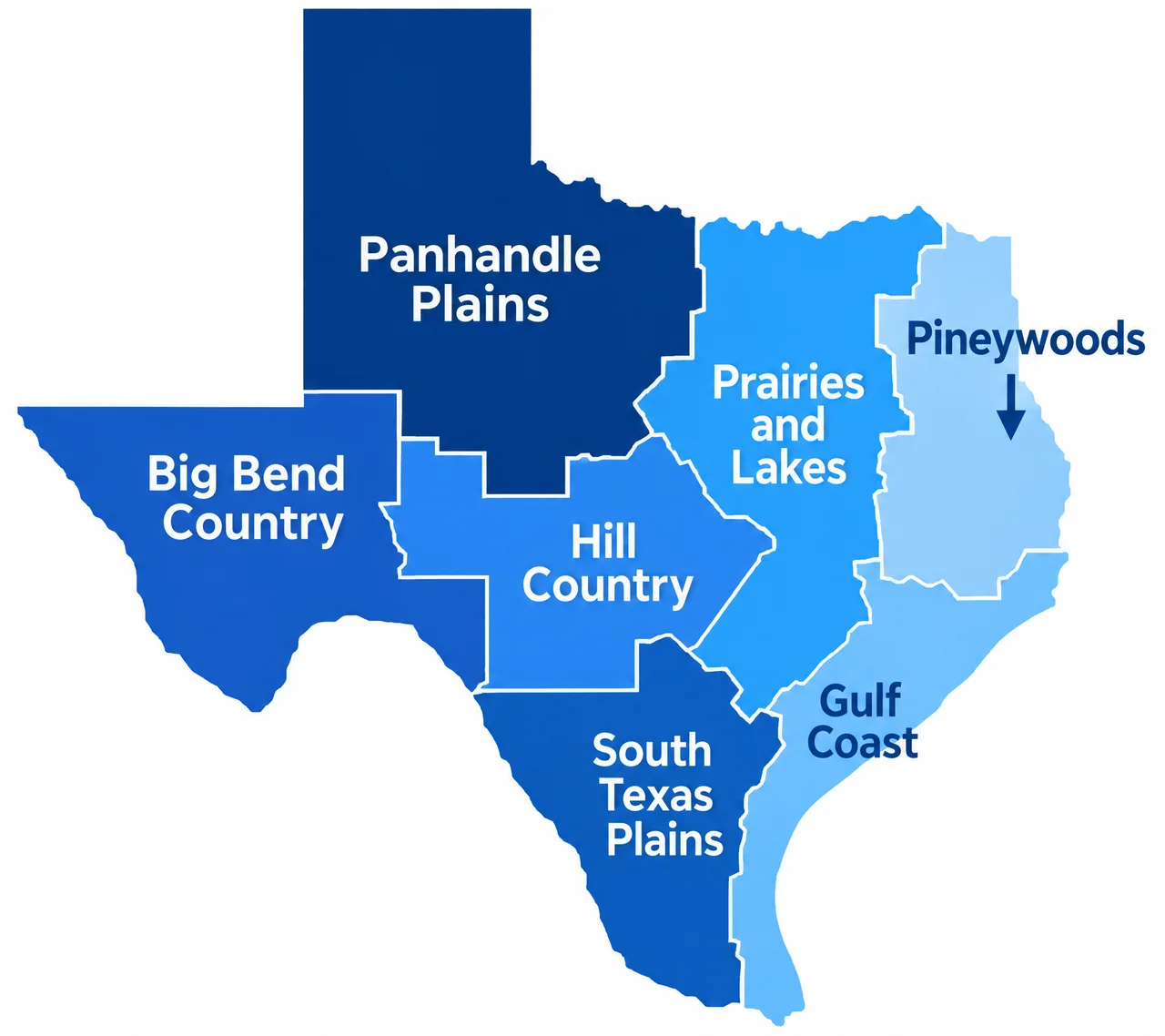
Hill Country
The classic Texas camping trip happens here, in the limestone hills west of Austin and San Antonio. Spring-fed rivers, bald cypress trees, swimming holes cold enough to make you gasp in August.
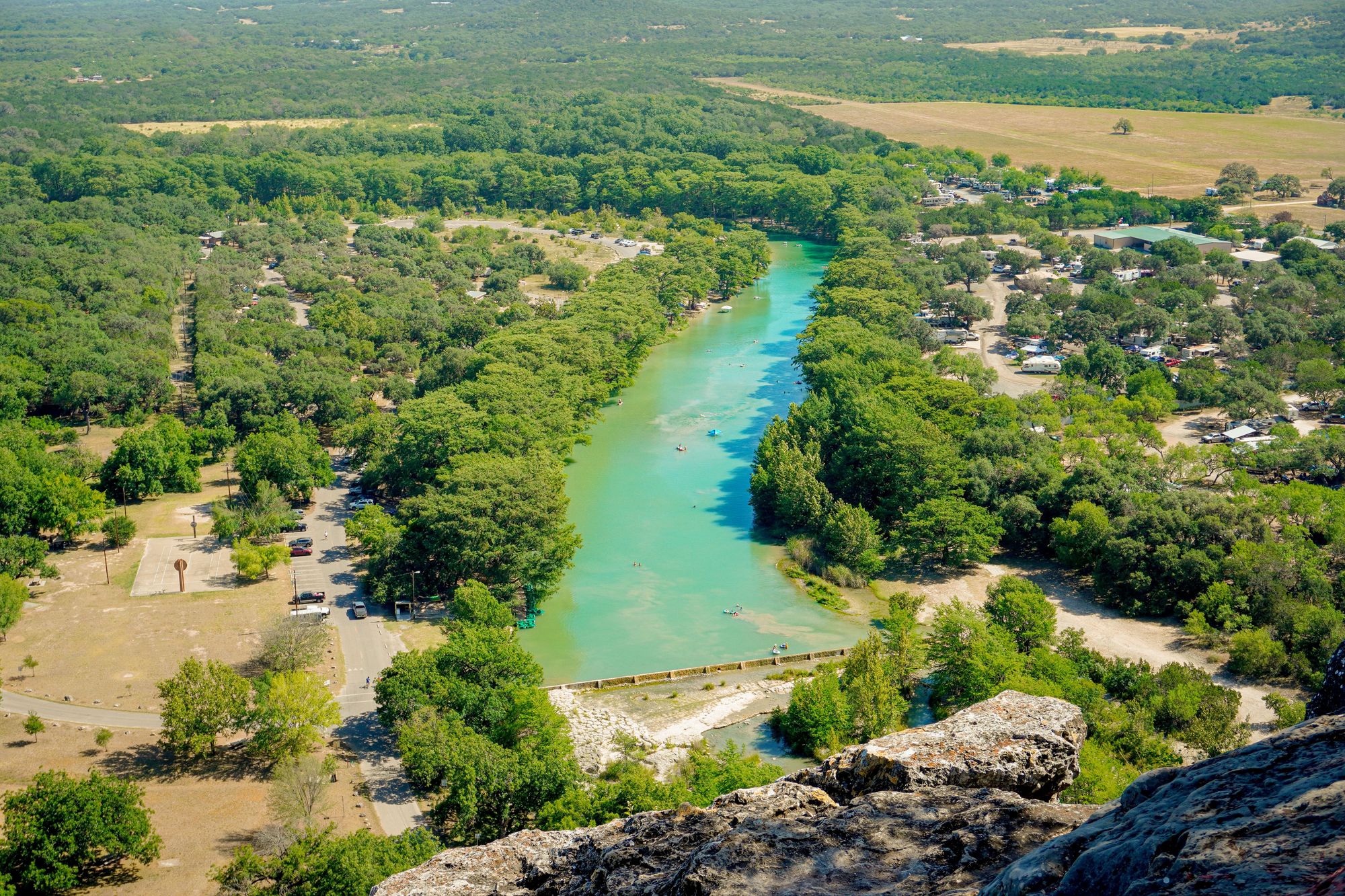
Garner State Park is the one to understand first. It sits on the Frio River about an hour and a half west of San Antonio, and it is the most popular state park in Texas for overnight camping. The Frio is spring-fed from the Edwards Aquifer and holds around 68 degrees year-round, which explains most of the park's popularity and all of its summer crowds. On summer weekends Garner regularly reaches capacity and closes to day visitors before noon. If you want a summer weekend campsite, book it the day reservations open.
Enchanted Rock State Natural Area, north of Fredericksburg, is the other Hill Country icon, and it comes with a catch worth knowing: camping is walk-in tent only. No RVs, no hookups. The rock itself is the largest pink granite dome in the United States, rising about 425 feet above the surrounding country, and it's also a certified dark sky park. Our suggestion for RV travellers: camp at one of the parks or private campgrounds around Fredericksburg and drive in for a sunrise or sunset climb.
If Garner is booked, look at the stretch of the Frio around Concan, or the cypress-lined Guadalupe River northeast of San Antonio. The swimming-hole argument between the Frio and the Guadalupe has no correct answer.
Big Bend Country
West Texas is the trip people mean when they say they want to get away from everything. It takes real effort to reach, and that's the point.
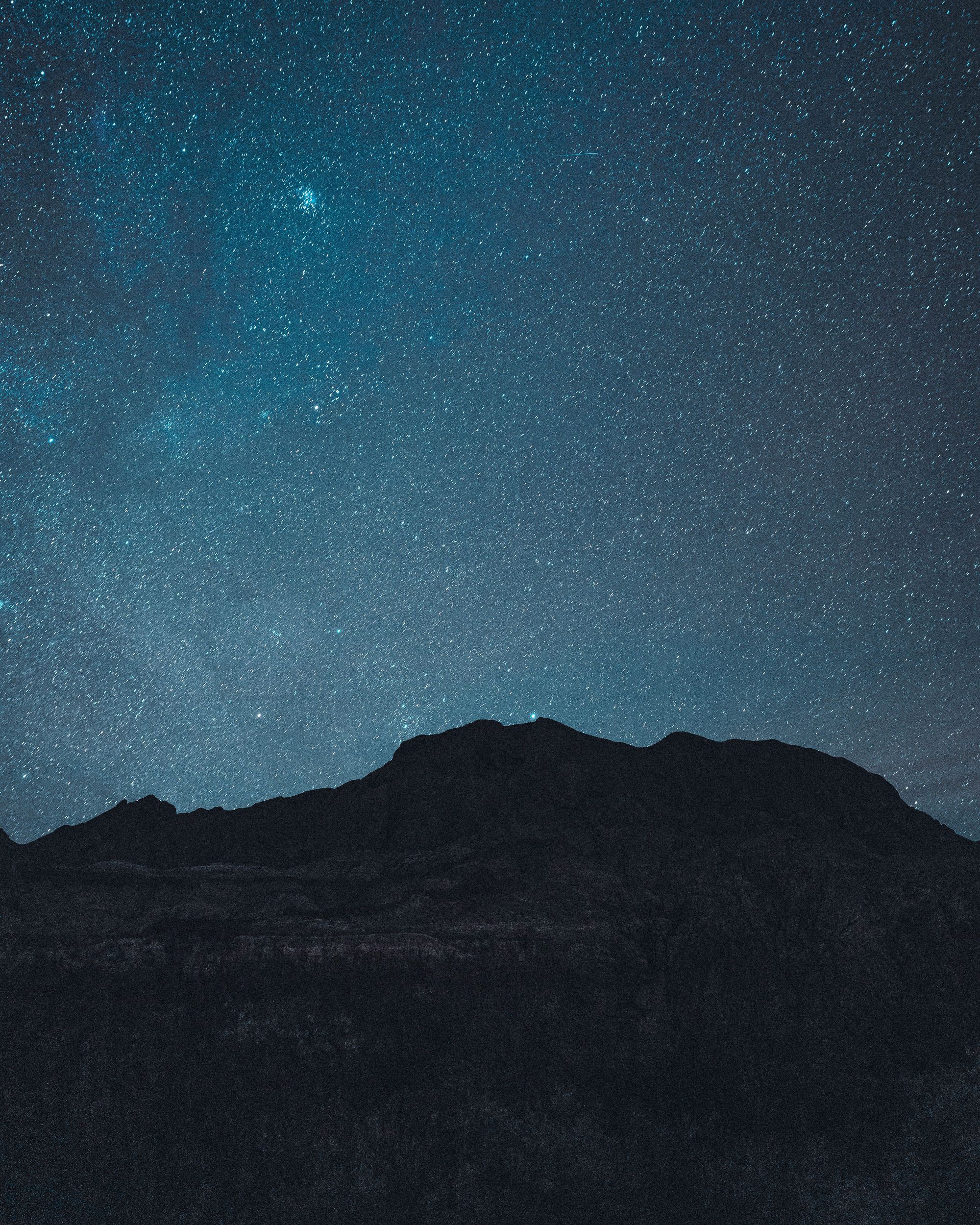
Big Bend National Park has the darkest measured night skies in the lower 48 states, according to the National Park Service's night sky team, and it has held an International Dark Sky Park certification at the gold tier since 2012. On a clear night you can see roughly 2,000 stars. In a city you might see a few hundred.
Two practical notes for RVers, because this is where trip plans go wrong:
- The road up to the Chisos Basin is steep and winding, with hairpin turns. The park recommends against motorhomes over 24 feet and trailers over 20 feet. If your rig is bigger, don't force it. There's almost nowhere up there to turn around.
- Rio Grande Village, on the park's east side, is the RV base instead. Its RV campground has the only full hookups in the park, 25 sites, with a maximum length of about 38 feet, and it fills fast from late fall through spring. That is also the park's high season; summer at river level is brutally hot.
Davis Mountains State Park, a few hours north near Fort Davis, is the easier version of a West Texas trip. The campground sits at over 5,000 feet, so nights stay cool even when the desert below bakes, and McDonald Observatory is about 15 minutes away. The observatory runs public star parties on Tuesday, Friday, and Saturday nights. Book those ahead; they're the best evening plan within a hundred miles.
Gulf Coast
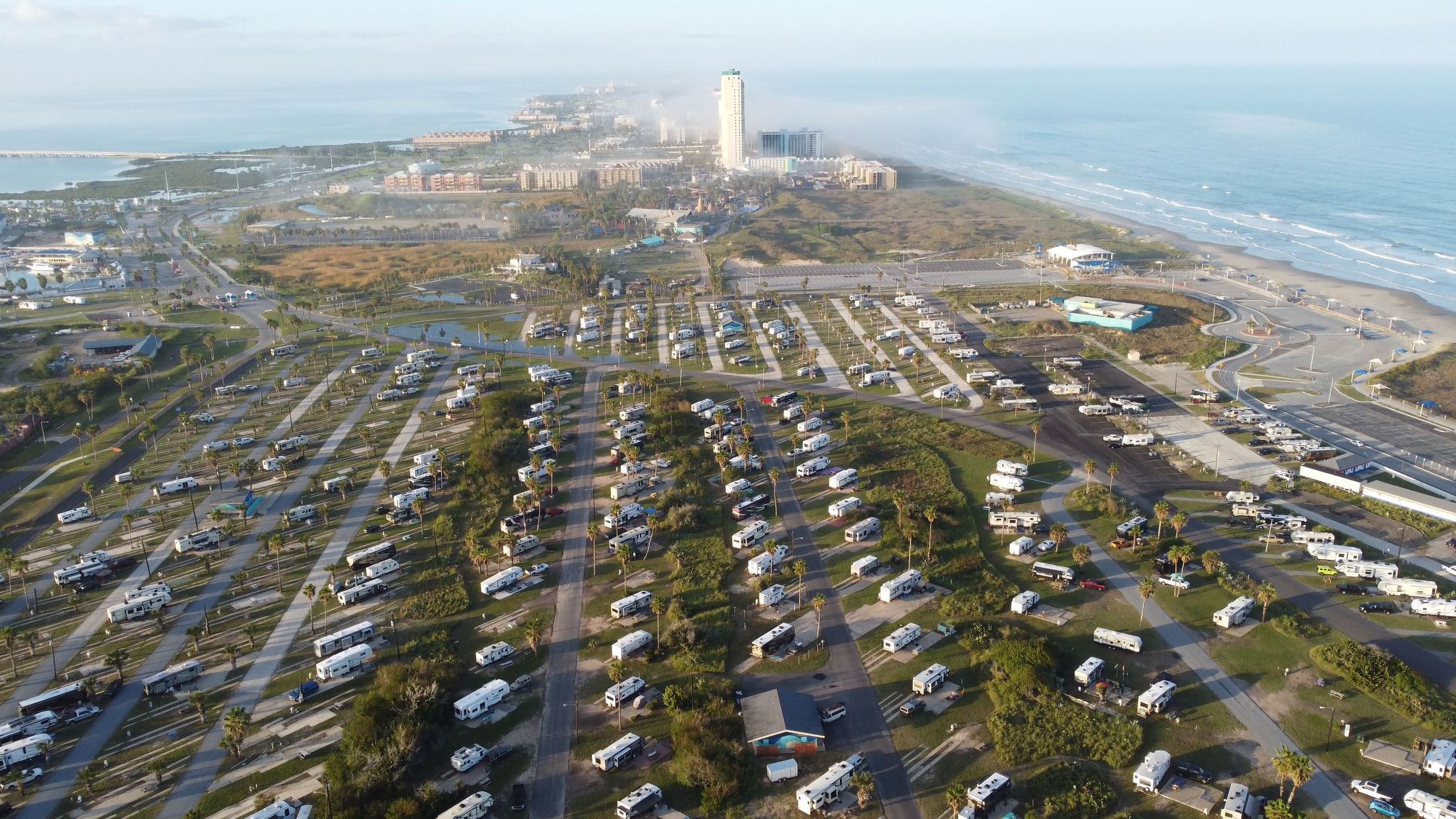
Padre Island National Seashore protects the longest undeveloped barrier island in the world, about 70 miles of it, south of Corpus Christi. Camping works differently here. Everything is first come, first served, with no reservations. You pay the park entrance fee and pick up a free camping permit, and then, if you have the right vehicle, you can camp directly on the sand.
That last part deserves a plain warning. The first few miles of beach are usually passable in a normal vehicle, but farther down the island is four-wheel-drive territory, and a heavy motorhome and soft sand are a bad combination. For most RV travellers, the move is a spot at the developed camping areas near the north end, or nearby Mustang Island State Park, which has water-and-electric sites a short walk from the Gulf.
Winter is the quiet season and, for a lot of people, the best one. The coast fills with birds, the crowds thin out, and this is exactly where Texas's winter RV migration goes.
Piney Woods
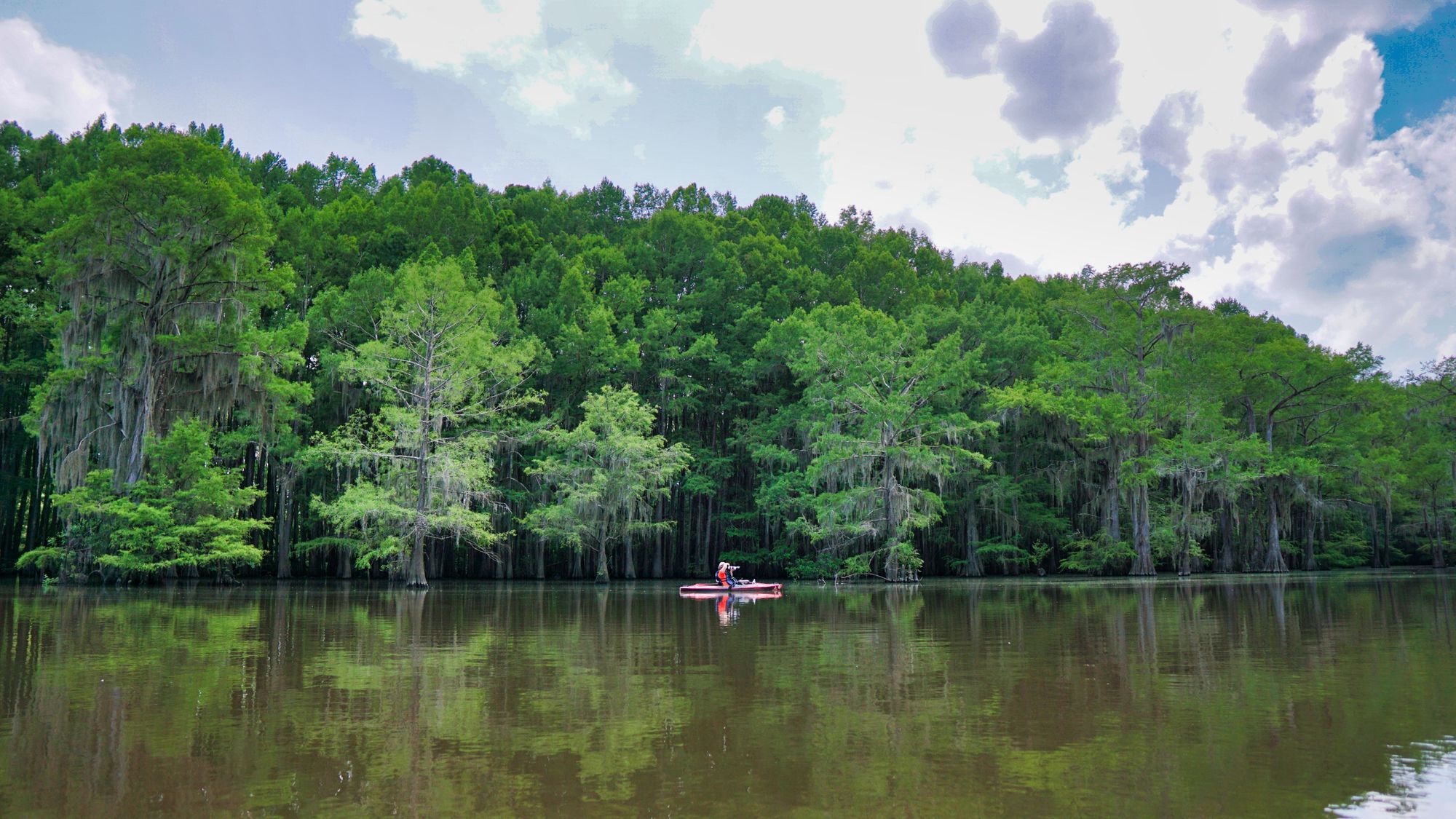
East Texas doesn't look like anyone's mental image of the state. Caddo Lake State Park, on the Louisiana border, sits on the largest cypress forest in the world and the largest natural lake in Texas. The lake is a maze of bayous and sloughs under Spanish moss, with more than 50 miles of marked paddling trails through it. There are alligators, which the park will remind you about, and campsites that run from primitive up to full hookups, plus stone cabins built by the Civilian Conservation Corps in the 1930s.
Go in October or November if you can. The cypress turns rust-orange and the humidity finally breaks. Photographers plan whole trips around that water in late fall.
Panhandle-Plains
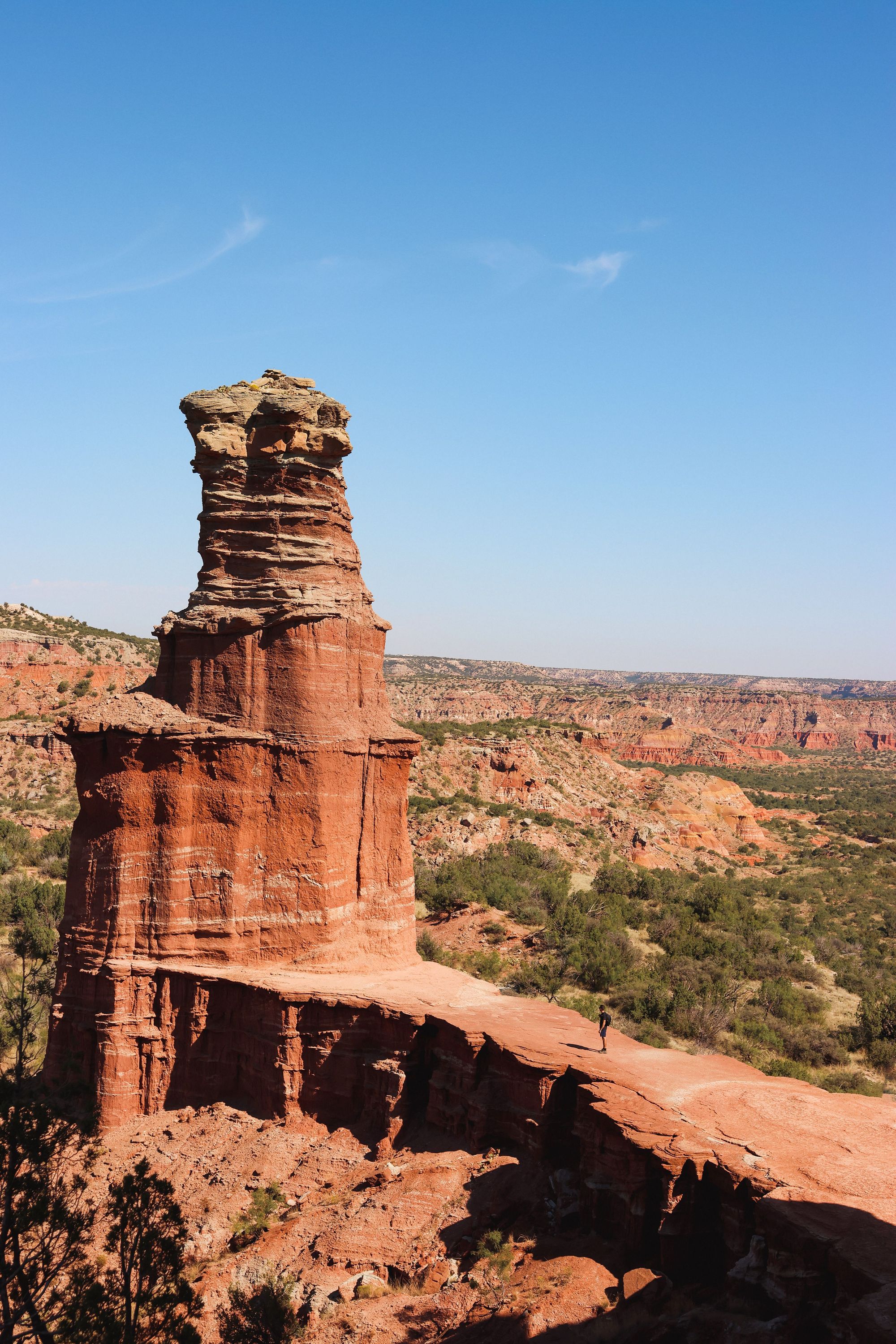
Palo Duro Canyon State Park, south of Amarillo, is the reveal nobody expects: dead-flat plains, then suddenly the second-largest canyon in the United States, about 800 feet deep and layered in red and orange. You drive down into it, and the campgrounds are on the canyon floor. The Hackberry and Sagebrush camping areas have water and electric sites that take RVs up to 60 feet, which makes this one of the most big-rig-friendly landscape parks in the state. There are also cabins up on the rim if part of your group won't camp.
Time it for spring or fall. The canyon floor in July regularly runs hotter than the plains above it, and shade is scarce.
An hour southeast, Caprock Canyons State Park offers a smaller version of the same red-rock country with one difference you notice immediately: the official Texas State Bison Herd roams the park freely, including through the campgrounds. Give them room; they were here first.
Prairies and Lakes
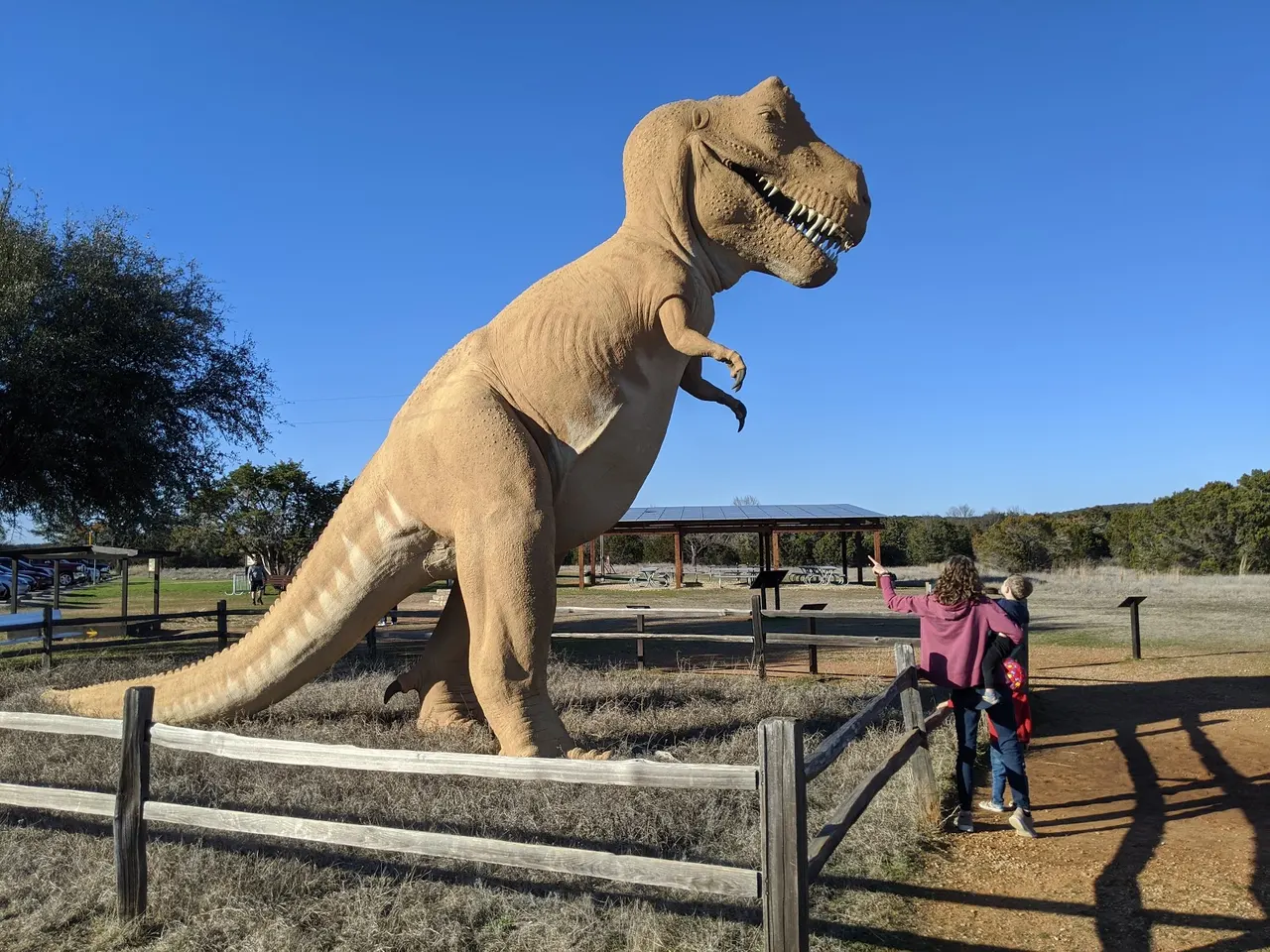
The country between Dallas-Fort Worth and Austin holds most of the state's reservoir campgrounds, which is where much of north Texas actually camps on a normal weekend. But the park worth driving for is Dinosaur Valley State Park near Glen Rose, where sauropod and theropod tracks about 113 million years old sit pressed into the limestone bed of the Paluxy River. When the river is low, usually in late summer, you can stand in the water and put your hand inside a footprint older than the Rocky Mountains. The park has a year-round campground and about 20 miles of trails, and it's 90 minutes from Fort Worth, which makes it the best first camping trip with kids in the state.
When to go
Texas camping season runs backwards from what northerners expect. Spring (March to May) and fall (October to November) are the sweet spots almost everywhere. Summer belongs to the rivers; if there's no swimming hole in your plan, there should be air conditioning. And winter is peak season in exactly two places: Big Bend, where the desert finally cools off, and the Gulf Coast, where the snowbirds park from November to March.
How Texas state park reservations work
Most of the parks above are Texas state parks, and they share one reservation system. Sites open for booking up to five months in advance, and the famous ones (Garner in summer, Palo Duro in fall) go quickly on the day they open. Big Bend is a national park and books separately, and Padre Island doesn't take reservations at all.
If you're planning a summer trip to a marquee park, work backwards: pick your dates, count back five months, and set a reminder.
Camping in Texas without owning any of the gear
Every region in this guide has RVs for rent nearby, listed by the people who own them. If you've never towed anything and don't want to start, filter for motorhomes, or use delivery: many owners will bring the trailer to your campsite, set it up, and pick it up when you're done. You drive your own car, and the campsite is ready when you pull in.
That works especially well for the parks in this guide with hookup sites: Garner, Palo Duro, Caddo Lake, Mustang Island, and Davis Mountains all have water and electric at the site, so the RV runs like a small cabin.
FAQ
What is the prettiest state park in Texas?
You'll start an argument with any single answer. The most common candidates are Garner (cypress trees and the green Frio), Palo Duro Canyon (800-foot red rock walls), and Caddo Lake (moss-draped cypress swamp). They look nothing alike, which is sort of the point of this guide.
Where can you camp for free in Texas?
Texas is more than 90 percent privately owned land, so free dispersed camping is scarcer than in western states. The main exceptions are beach camping (Padre Island National Seashore requires only the park entrance pass and a free permit) and a handful of national forest and grassland areas in East and North Texas. Most Texas camping happens in state parks, where a basic campsite is one of the cheaper nights available in the state.
What's the best month for camping in Texas?
October and November, if you're picking one window: the heat breaks statewide, the parks are open everywhere, and East Texas gets fall color. April is the spring equivalent, with wildflowers in the Hill Country.

Team RVezy
Team RVezy is a group of RV enthusiasts who traverse the U.S. and Canada in our campervans, tiny trailers, and motorhomes. We love the open road and the feeling of having nowhere to go but everywhere.
View more posts