The Glamis sand dunes road trip: a week of RV camping in America's biggest sandbox
Posted on August 14, 2026
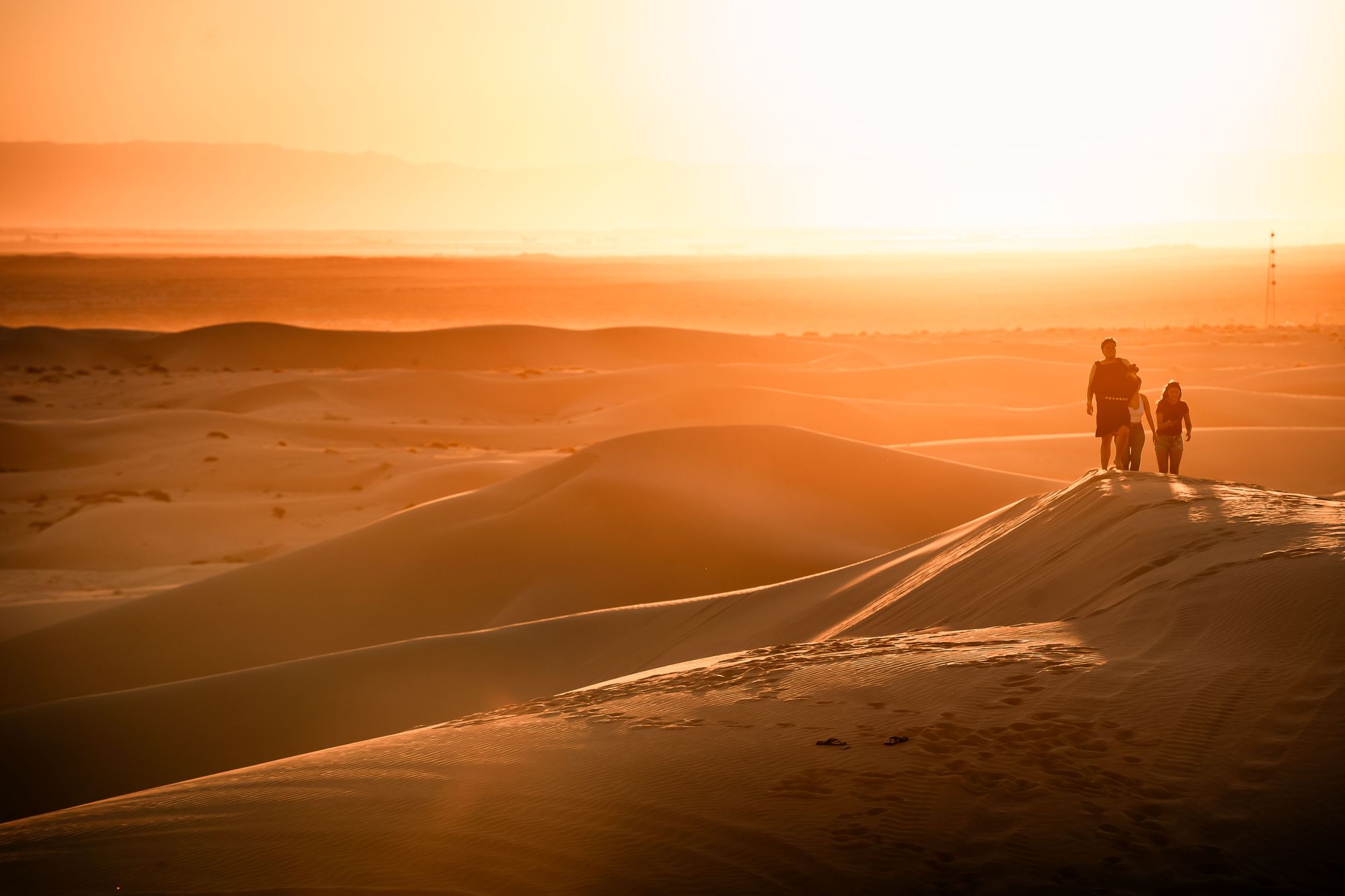
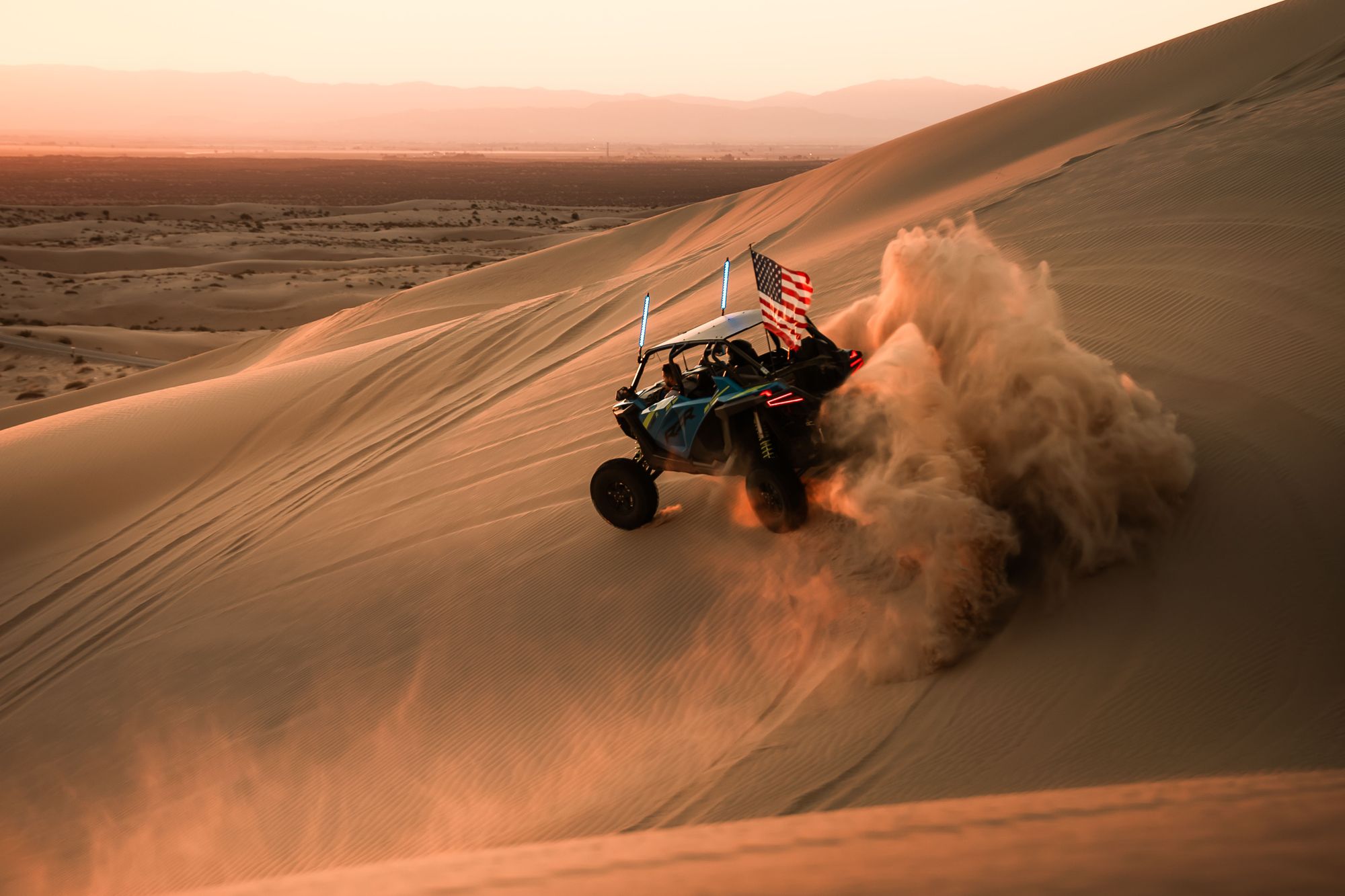
Every October, a strange migration happens in the California desert. Tens of thousands of RVs roll down Highway 78 east of Brawley and set up camp at the edge of the Imperial Sand Dunes, better known to anyone with a dirt bike or a side-by-side as Glamis. For the next six months this 40-mile ribbon of sand is the center of the off-road universe. Then summer hits 115°F and everyone goes home.
The Imperial Sand Dunes Recreation Area is the largest sand dune system in California: more than 40 miles long, averaging 5 miles wide, with dunes stacking up to 300 feet above the desert floor. There are no hotels and no hookups, and cell signal is patchy at best. Everyone who comes here camps, and almost everyone camps in an RV.
That’s what makes this trip different from a national park loop. At the Glamis sand dunes, your RV is base camp, chase vehicle, and grandstand seat all at once. Below is a full week, laid out day by day, with the permit and event details you’ll want sorted before you leave the driveway.
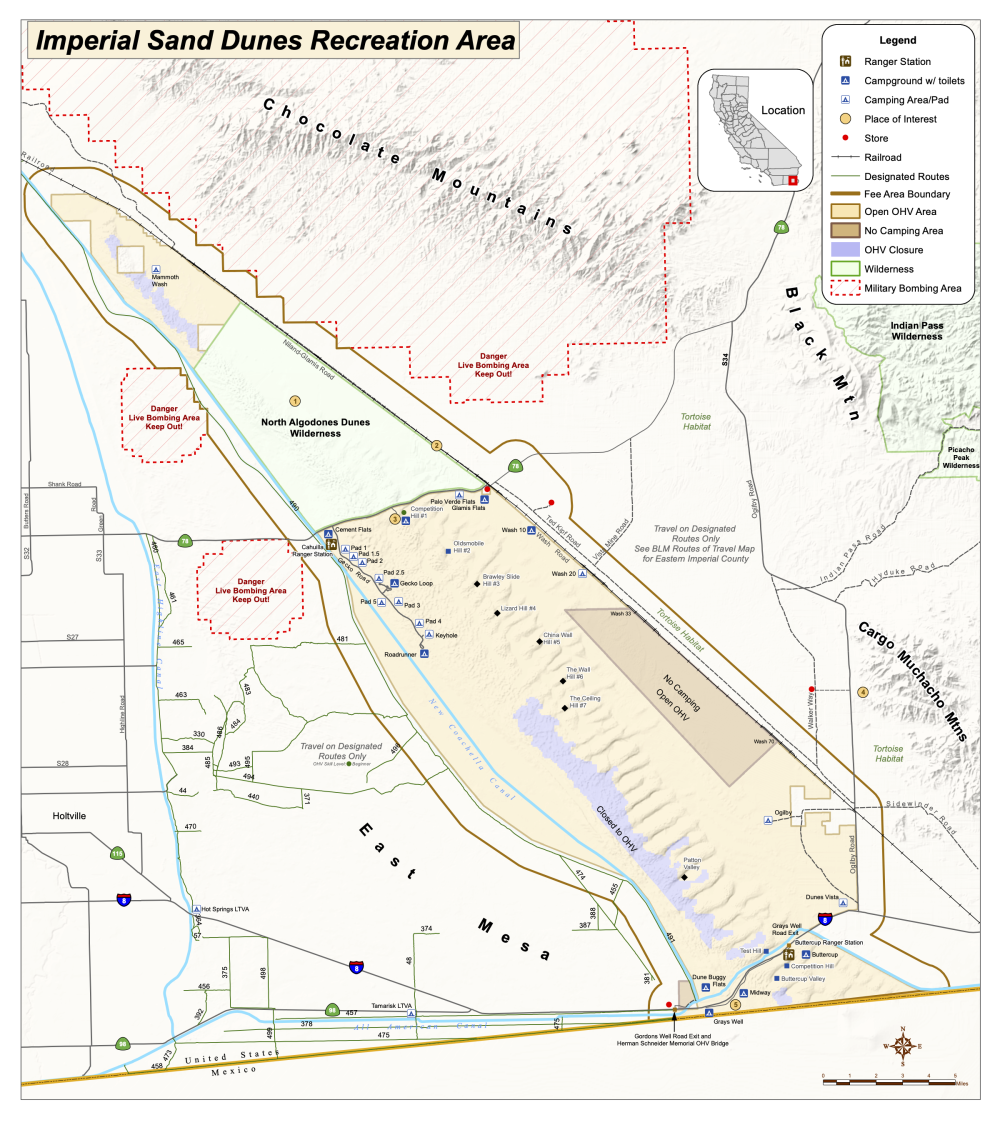
First, the Glamis sand dunes map
Glamis has no street signs, and the dunes literally move. Locals navigate by landmarks: a flagpole bolted to a WWII-era steel box, a swing set in the middle of nowhere, a hill named after an Oldsmobile. Save this map before you arrive, because once you’re in the sand, GPS pins and line of sight are how you’ll find everything below.
When to go (and what’s happening while you’re there)
Dune season runs roughly October through April. The BLM requires permits from October 1 to April 15, which tells you exactly when the crowds show up. Summer is effectively off limits, with daytime temperatures well past 110°F.
A few dates worth planning around:
Halloween weekend: Camp RZR. Polaris throws its Camp RZR season kickoff at the Glamis sand dunes on October 30–31, 2026, and it’s free. Free RZR demo rides, a Vendor Village with live music and an FMX show, a kids’ zone with bounce houses and a mini track, plus new additions this year like a Ninja Nation obstacle course and the Ram 1500 RHO thrill ride. If you want your first Glamis trip to feel like a festival, this is the weekend.
Thanksgiving. The biggest weekend of the year. The Calexico Chronicle reported roughly 117,000 visitors over Thanksgiving weekend in 2023, which briefly makes the dunes one of the most populated places in Imperial County. Come for the spectacle, but book your RV early and arrive Wednesday if you want a decent camp spot.
New Year’s, Presidents Day, and spring break round out the peak weekends, with informal races and drags running all season.
If you’d rather have the dunes half to yourself, aim for a mid-week trip in early December or late January.
Permits, flags, and the rules that matter
Nothing sours a trip faster than a ranger visit you weren’t expecting, so handle this before you leave.
Every primary vehicle (the street-legal one you drive in on) needs a recreation permit from October 1 to April 15. As of the 2025–26 season it costs $55 for a weekly permit bought online in advance, $70 on site, or $185 for the season. Buy ahead at isdpermits.net; the on-site markup is real.
Every vehicle that goes in the sand needs a 6-by-12-inch red or orange safety flag on a whip mast reaching 8 feet from the ground, mounted within 10 inches of the tip. Dune crests hide oncoming traffic, and that flag is often the only thing another rider sees before they see you.
Camping is open BLM land with a 14-day limit. No reservations, and no saving spots for friends arriving later.
One more thing before you touch sand: air down. Dropping your tires to around 20 PSI (lower on dedicated sand tires) is the difference between floating over the dunes and digging yourself a driveway-sized hole. Bring a compressor for the trip home.
Base camp: Glamis camping on Gecko Road
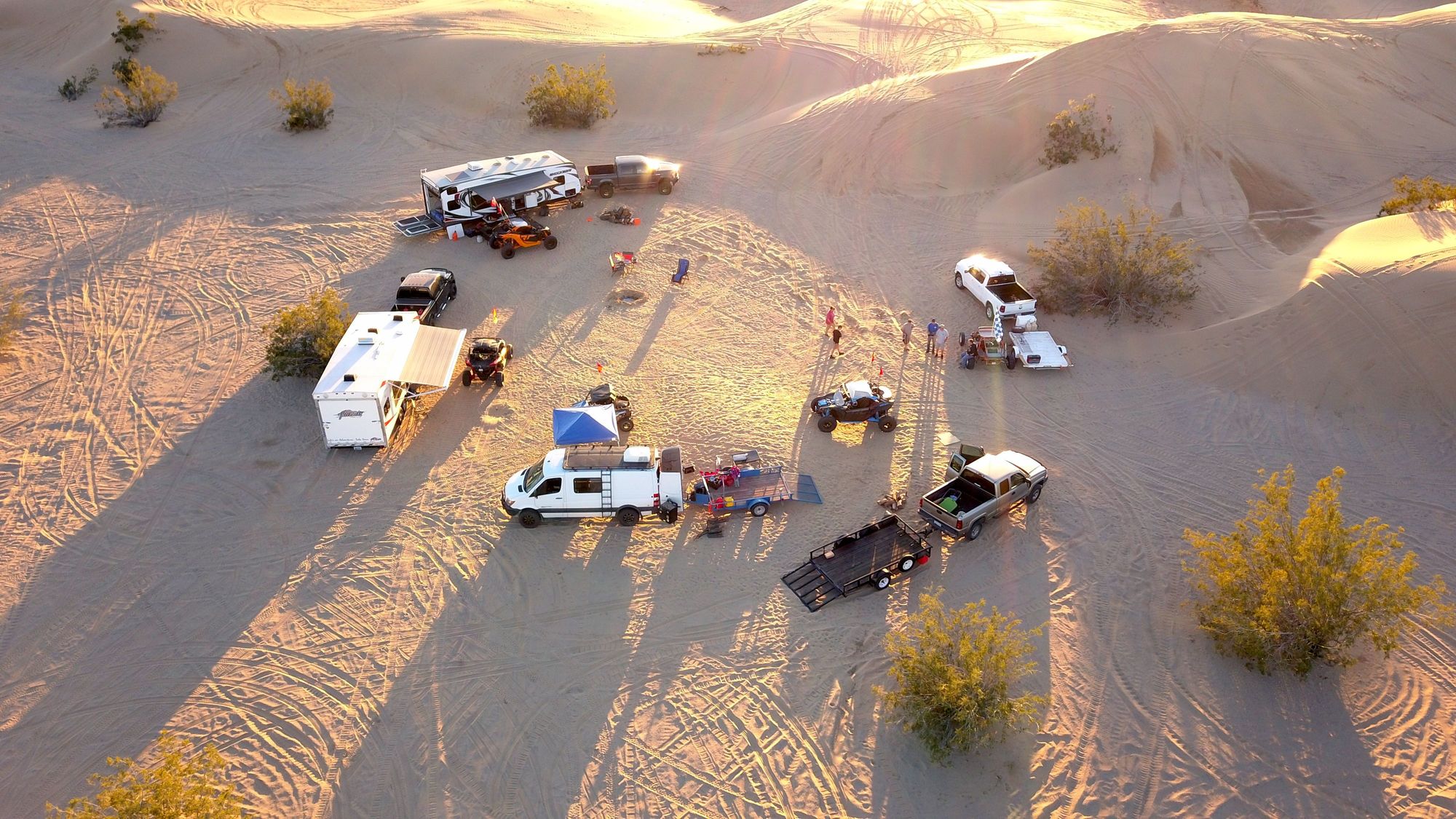
For a first trip, camp along Gecko Road, the paved corridor south of Highway 78 that is effectively Glamis’s main street. You get pavement for leveling the rig, quick access to the Cahuilla Ranger Station, and a front-row parking spot at the edge of the open dunes. Flat concrete pads (locals just call them “the pads”) sit right off the road, and the sand drags run near Pad 1 most afternoons.
There are no hookups anywhere in the dunes, so this is proper boondocking: bring water, bring a generator or solar, and plan your tanks around a week of dry camping. If that sounds intimidating in a camper you own, it’s a strong argument for renting. Let someone else’s rig take the sand.
The itinerary: seven days at the Imperial Sand Dunes
Day 1: Arrive, set camp, learn the sand.
Get to Gecko Road with daylight to spare. Air down, flag up, and take a short shakedown ride near camp while the light is good. The sand changes texture constantly. Witches’ eyes (hidden bowls) and razorbacks are real, and the first hour out there teaches you more than any forum thread.
Day 2: Vendor Row and the Glamis Beach Store.
Ride the northeast corner of the dunes to Vendor Row, where food stands, parts vendors, and flag sellers set up during the season next to the Glamis Beach Store. Grab whatever you forgot, then find the deep-fried Oreos with vanilla ice cream that regulars call “Glamis Crack.” You’ll understand the name.
Day 3: Oldsmobile Hill, day and night.
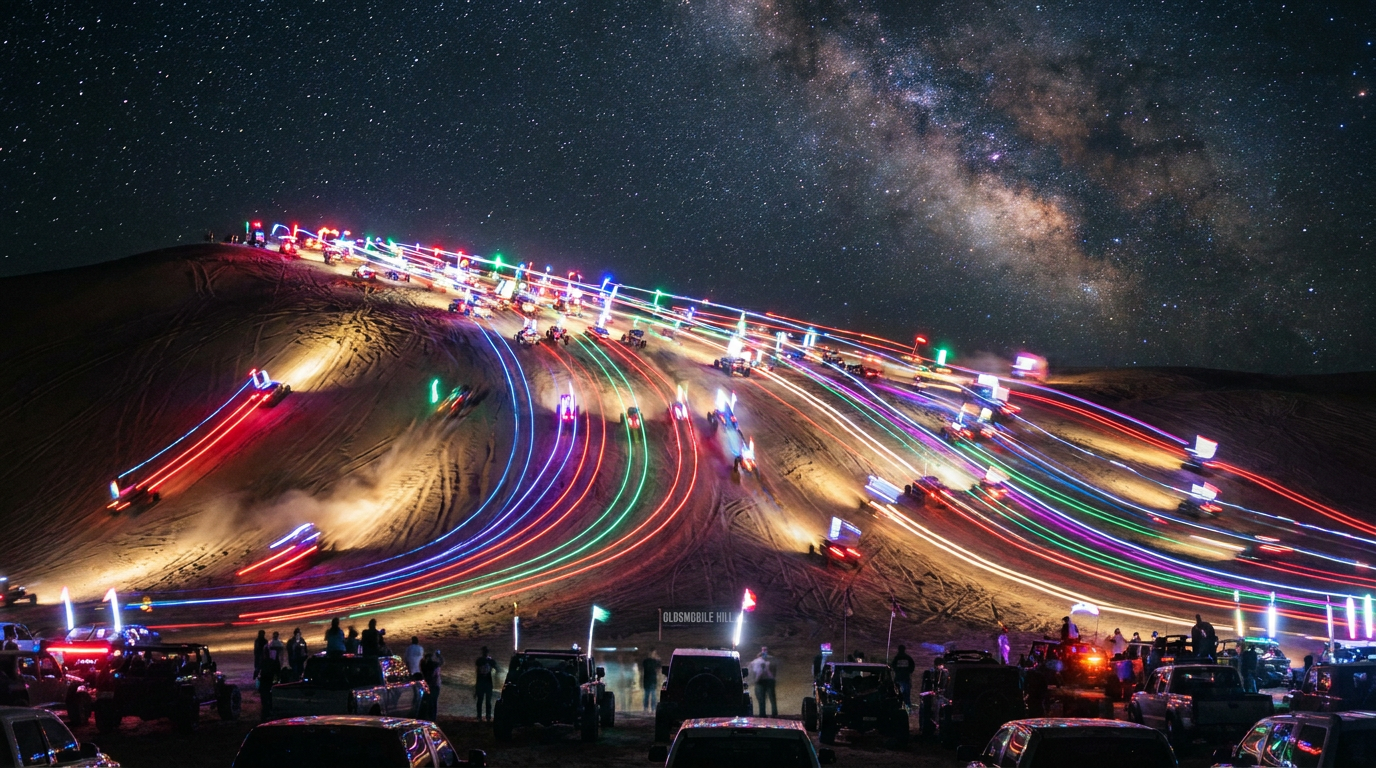
Oldsmobile Hill is the center of gravity at the Glamis sand dunes, a big, steep climb where crowds gather to watch hill shots all afternoon. Come back after dark on a busy weekend: hundreds of lit-up vehicles turn the hill into a moving LED light show, and it’s the single most Glamis thing you will ever see. Ride out with a group and keep your flag lit.
Day 4: The landmarks loop.
String together the classics. The Swing Set was built as a memorial to off-roader Art Wood and now draws big weekend crowds with a grill, tetherball, and a volleyball net. The Flag Pole stands on a steel box in the open dunes and hosts a Veterans Day ceremony that pulls in thousands each year. Finish with the Brawley Slide, a long downhill run any local will happily point you toward. This is the day the map earns its keep.
Day 5: China Wall and the sand drags.
China Wall is the steepest face in the dunes and the local horsepower test. Plenty of machines don’t make the top, which is half the entertainment. Wind down at the sand drags near Pad 1, where buggies and quads line up for side-by-side passes from mid-afternoon until sunset.
Day 6: Rest day at Glamis North Hot Springs.
Your shoulders will thank you. Glamis North Hot Springs Resort in Niland, about 45 minutes northwest, has natural hot mineral pools and big-rig-friendly RV sites. You can even rent an RV right at the resort through RVezy. Soak, refill your water, dump the tanks, and roll back to the dunes rested.
Day 7: Boardmanville and the drive home.
On your way out, stop at the Boardmanville Trading Post, the log-cabin store, bar, and grill that Chuck Boardman opened in 1978. Thousands of signed dollar bills cover the walls inside and out. Staple yours up before you air your tires back to street pressure and point the rig home.
Why a toy hauler is the right rig for this trip
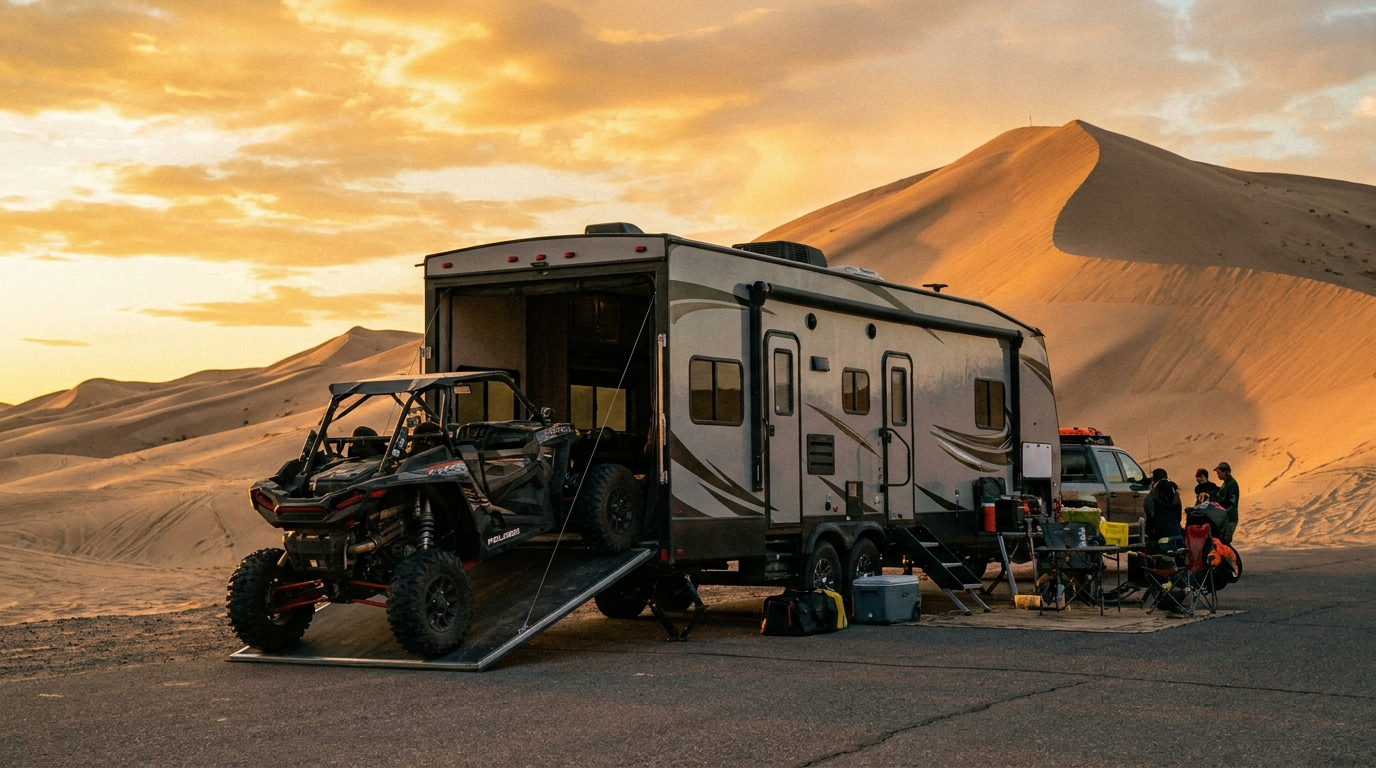
Glamis runs on toy haulers, and once you’re there it’s obvious why. The garage in the back carries your side-by-side or dirt bikes to the dunes, then converts to extra sleeping space at camp. The ramp door doubles as a patio. Most have generators and big water tanks built for exactly this kind of dry camping.
You don’t need to own one. A toy hauler rental sidesteps the storage, the insurance, and the $60,000 question entirely: rent it for the week, load your machines, and hand back a sand-blasted rig when you’re done. Coming from out of the area? Plenty of owners near Los Angeles and Phoenix rent toy haulers within towing distance of the dunes, and many offer delivery. Some will even set up at your camp spot before you arrive.
No toys of your own yet? Come anyway. Between free demo rides at Camp RZR, the show at Oldsmobile Hill, and a camp chair at the drags, the Glamis sand dunes are worth the trip before you own anything with paddle tires.
Quick answers before you go
Do I need a permit for the Glamis sand dunes?
Yes, from October 1 to April 15: $55 weekly online, $70 on site, or $185 for the season, per primary vehicle. Osborne Overlook and a few other day-use spots don’t require one if you just want to look.
Can I camp at the Imperial Sand Dunes in any RV?
Yes. It’s open BLM camping with a 14-day limit and no hookups. Toy haulers are the local favorite, but any self-contained rig works if you stick to the pavement and established camp areas.
When is the best time to visit?
Halloween through Presidents Day is peak season. Camp RZR (October 30–31, 2026) is the biggest single event, and Thanksgiving brings the biggest crowd. For quieter dunes, go mid-week in December or January.
Sources: Bureau of Land Management — Imperial Sand Dunes, BLM fee schedule, BLM rules and regulations, Polaris Camp RZR, Calexico Chronicle, Boardmanville Trading Post, Glamis North Hot Springs

Team RVezy
Team RVezy is a group of RV enthusiasts who traverse the U.S. and Canada in our campervans, tiny trailers, and motorhomes. We love the open road and the feeling of having nowhere to go but everywhere.
View more posts