Joshua Tree by RV — California's Most Magical Desert Road Trip
Posted on June 16, 2026
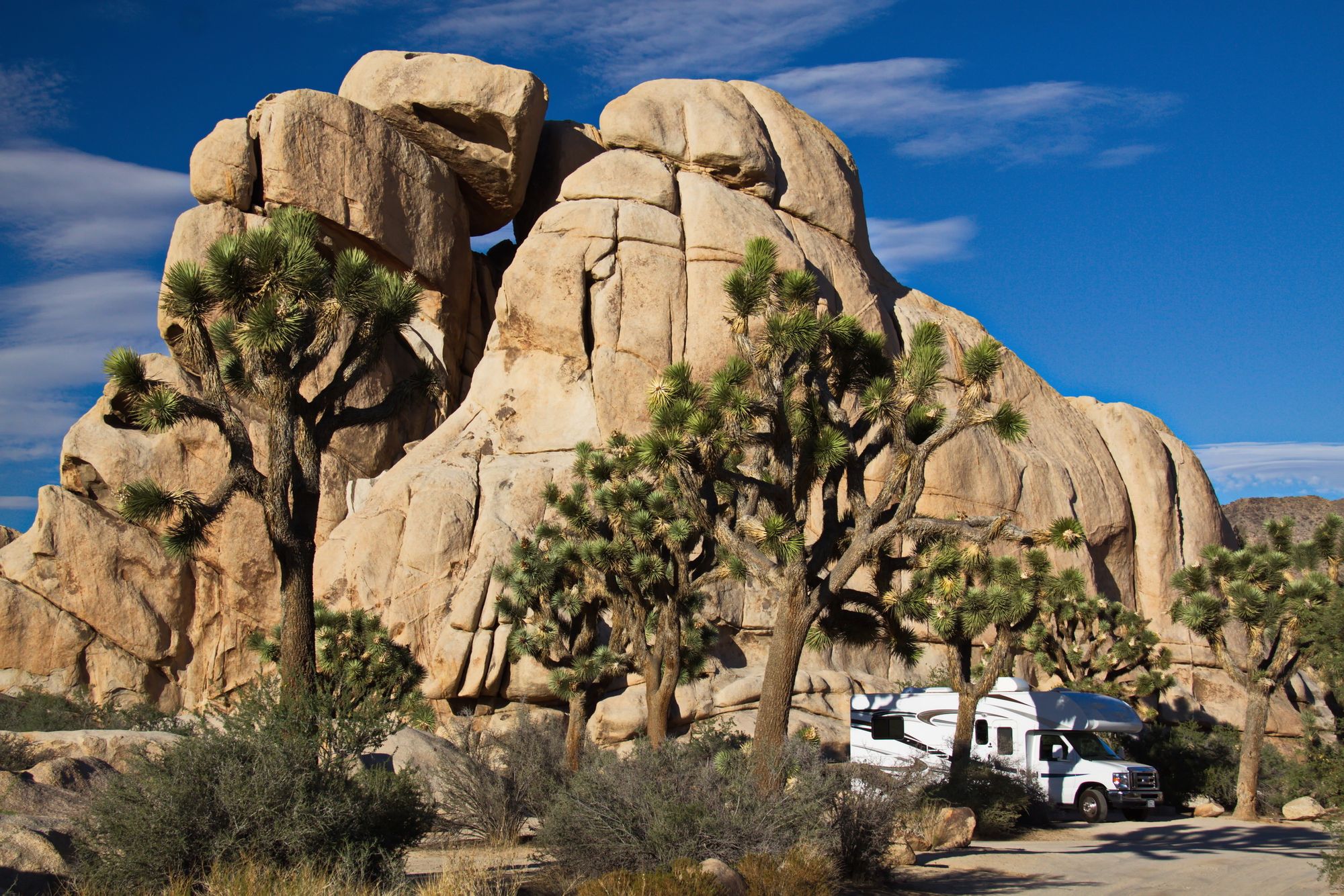
Joshua Tree does something to people. It is difficult to explain before you have been there and unnecessary to explain after. The boulders stacked in formations that look hand-placed. The Joshua trees themselves, which resemble nothing else in the botanical world. The silence so complete that children who have grown up in cities go genuinely quiet the first time they step out of the car. The night sky, when the last light fades and the Milky Way appears overhead in a way that most Americans have never seen from their own backyards.
Families who visit Joshua Tree once almost always go back. It is one of those places that gets better with time, that reveals something different at each hour of the day and each season of the year. This guide covers everything a family needs to plan an RV trip to Joshua Tree, including how RV delivery through RVezy makes the experience accessible without a truck or towing experience.
Why Joshua Tree Is a Perfect Family RV Destination
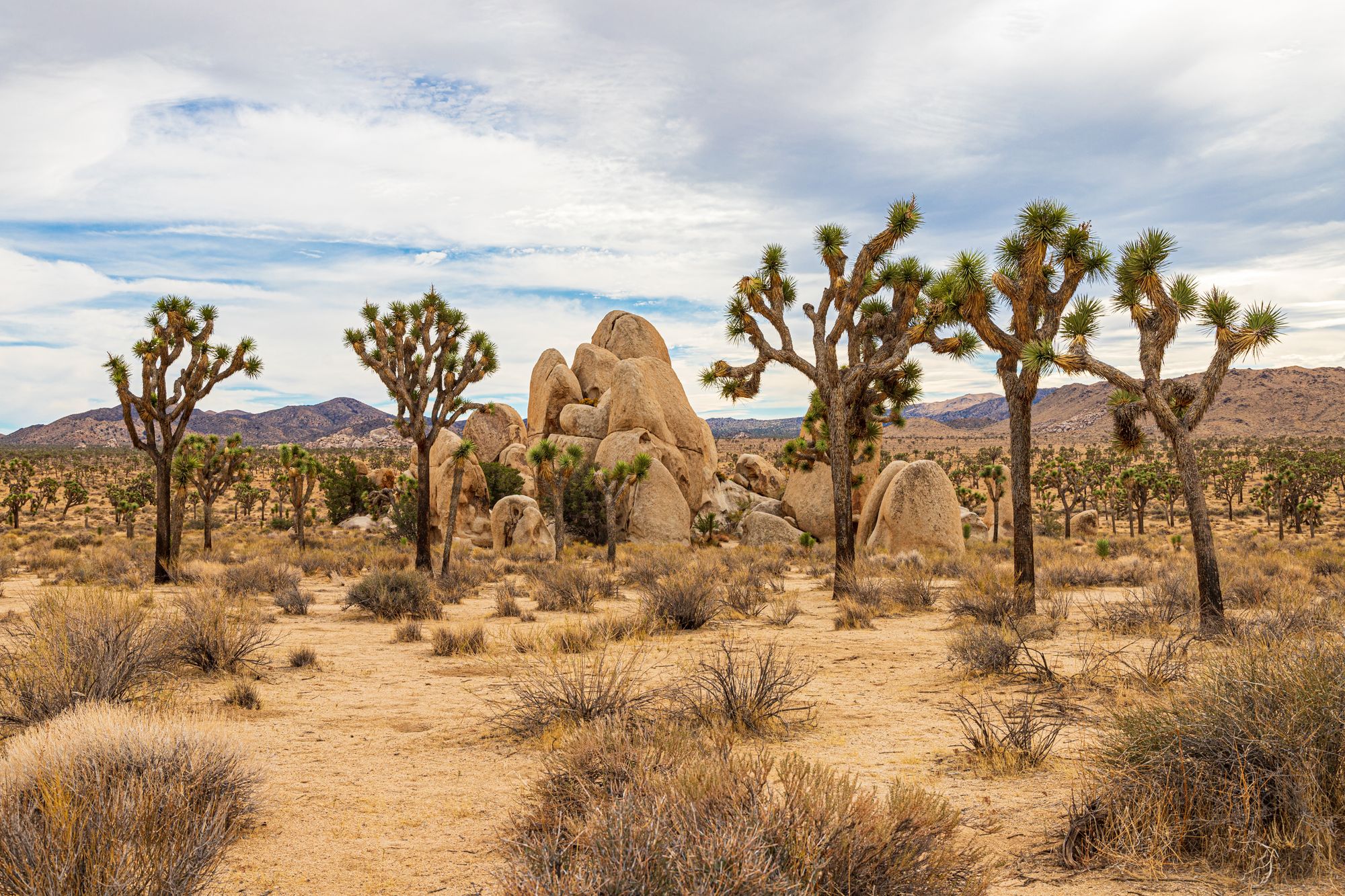
Joshua Tree sits at the convergence of two distinct desert ecosystems. The Mojave Desert occupies the western and higher portion of the park, above roughly 3,000 feet, and is where the iconic Joshua trees grow. The Sonoran Desert covers the lower eastern portion, hotter and more spare, with a different and quieter character. The transition between them, visible from several points along the main park road, is one of the more remarkable things in California.
For families, the park offers an unusual combination of accessibility and wildness. The main park road is paved and manageable. The boulder formations are climbable by kids of almost any age. The hikes range from flat and short to strenuous multi-day backcountry routes. There are no admission requirements beyond the park entrance fee, no shuttle systems to navigate, and no crowds on the scale of Yosemite Valley.
The park is also genuinely dark at night. Joshua Tree is one of the closest International Dark Sky Parks to both Los Angeles and San Diego, which means the night sky here is extraordinary by any standard. For families whose kids have only ever seen a handful of stars through urban light pollution, a clear night at Joshua Tree is often described as one of the most memorable moments of the entire trip.
The Best Campgrounds Inside Joshua Tree
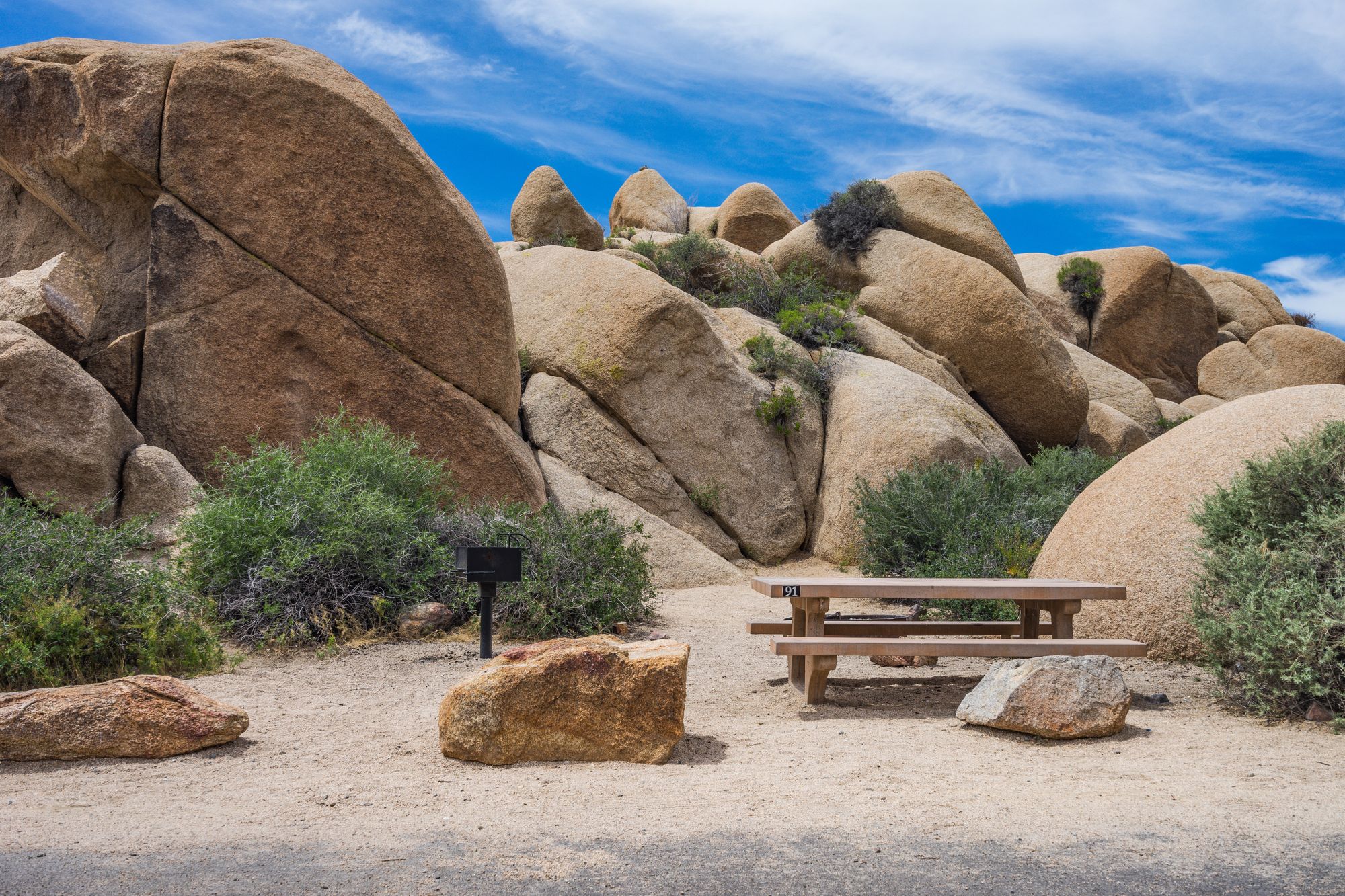
Joshua Tree has nine campgrounds inside the park, ranging from developed sites with amenities to primitive first-come, first-served areas. For families using RV delivery through RVezy, the key consideration is campground accessibility and proximity to the park's main attractions.
Jumbo Rocks is the most popular developed campground in the park and the best choice for most families. Sites are dispersed among the park's iconic boulder formations with excellent privacy and direct access to short hiking loops. Central location with easy access to the main park road. Reservations through Recreation.gov. No hookups.
Hidden Valley is smaller and more intimate, set within a tight cluster of boulders that form a natural enclosure. A short loop trail circles the valley floor. Popular with families who want a cozier feel and kids who want to explore the boulder maze on foot. Reservations through Recreation.gov. No hookups.
Cottonwood Campground is in the Sonoran Desert section of the park near the south entrance, quieter and less crowded than the western campgrounds. Good choice for families who want more solitude and a different desert character. Flush toilets available. Reservations through Recreation.gov.
Black Rock Campground near the northwestern entrance has full hookups, making it one of the few developed campground options with power and water inside or adjacent to the park. Good access to the High Desert Trail system. Reservations through Recreation.gov.
What to Do, See, and Experience
The main park road runs roughly 25 miles between the west entrance near Joshua Tree town and the north entrance near Twentynine Palms. Almost all of the park's major attractions are accessible from this road or short detours off it.
Skull Rock is a short walk from the main road near Jumbo Rocks and is one of the most photographed formations in the park. The boulder has a naturally eroded depression at the top that resembles a skull when seen from the right angle. Kids universally love it.
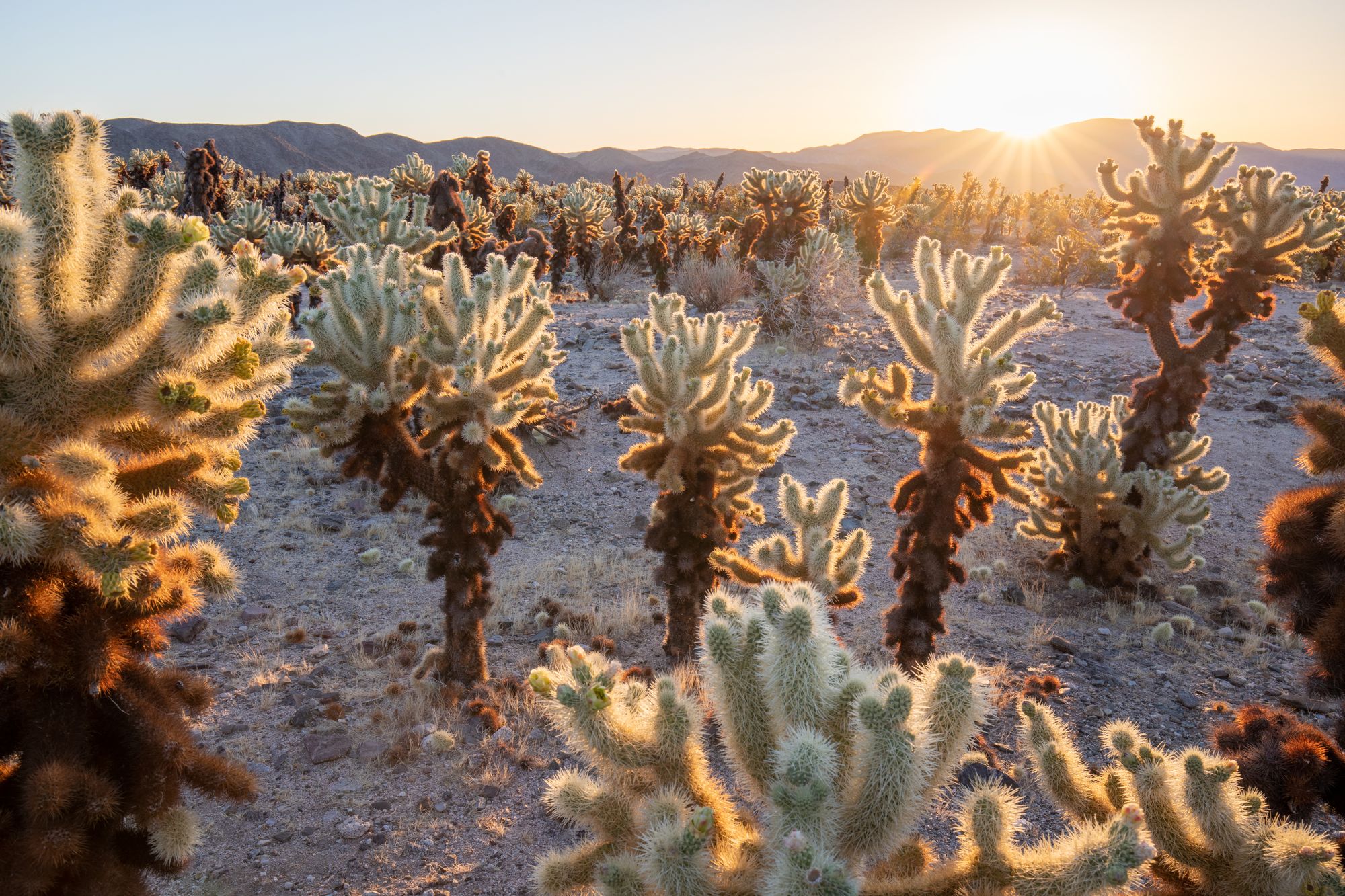
Cholla Cactus Garden is a flat, paved loop through a dense stand of teddy bear cholla. The cacti are extraordinarily beautiful in the late afternoon light when they glow gold and appear almost soft. They are not soft. Brief the kids before the trail.
The Barker Dam loop is a 1.3-mile trail to a small reservoir that collects seasonal water and often attracts desert wildlife. The canyon walls above the dam have petroglyphs, which makes this one of the most historically interesting short hikes in the park.
Sunrise and sunset are worth planning your days around. The light in the desert at the edges of the day turns the boulders and sand into shades that photos cannot fully capture. Set an alarm on at least one morning and walk out of the trailer with your coffee while it is still dark.
Stargazing is a genuine attraction, not just a footnote. On a clear night away from the campground lights, the sky at Joshua Tree is as dark as anywhere accessible by road in Southern California. The park offers ranger-led astronomy programs on select evenings during peak season.
How RV Delivery Makes Joshua Tree More Accessible
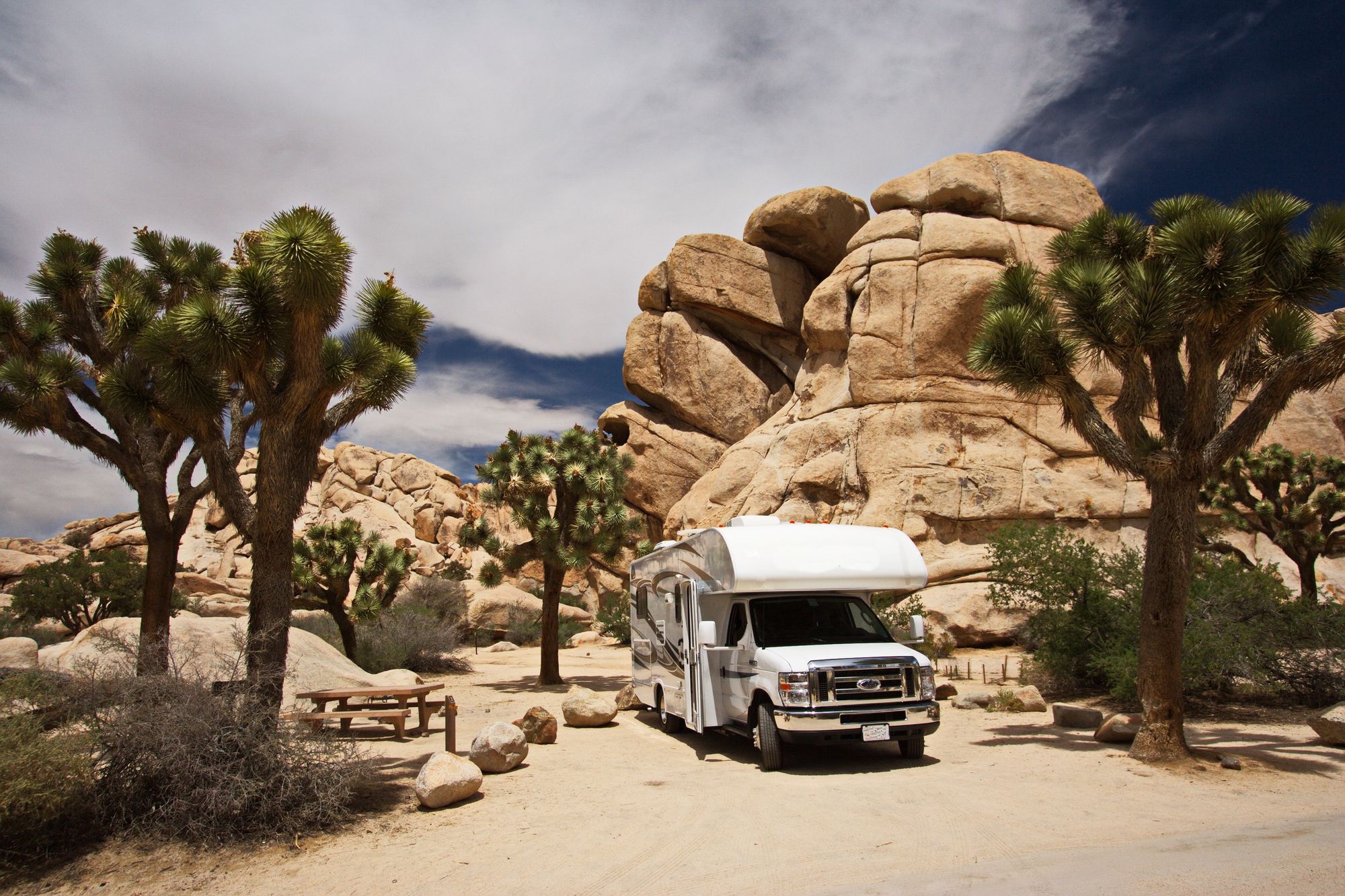
Joshua Tree is one of the most delivery-friendly destinations in California. The campgrounds are accessible, the access roads are manageable, and the park is within delivery range of a large number of RVezy owners in the Inland Empire, Coachella Valley, and greater Los Angeles area.
For families flying into Palm Springs or Los Angeles, delivery means the trailer is already set up at your campground when you land and drive out. No rental truck. No towing a rig through the Inland Empire on a Friday afternoon. You arrive at the park entrance, pay your fee, drive to your campsite, and the home base is already there.
For Southern California families making the drive from Los Angeles, San Diego, or the Inland Empire, delivery means the drive out is in your own vehicle, at your own pace, with no trailer to manage. The trip starts when you pull into the campground, not when you finish unhitching.
Delivery also opens up larger and more comfortable trailers than most families would attempt to tow themselves. A 28-foot travel trailer with a full kitchen, dedicated sleeping areas, and air conditioning for the desert heat is a different experience than a compact unit sized to what a standard SUV can pull. At Joshua Tree in summer, where afternoon temperatures regularly exceed 100 degrees Fahrenheit, air conditioning is not a luxury.
Planning Notes for Summer Visits
Summer at Joshua Tree means heat. Daytime temperatures in July and August regularly reach 100 to 110 degrees Fahrenheit in the lower elevations of the park. The Mojave Desert section, where most campgrounds are located, sits higher and is somewhat cooler, but summer is still the most demanding season for families.
Plan outdoor activities for early morning and evening. Sunrise hikes, when the temperature is in the 70s and the light is extraordinary, are the best time to be outside. By midday, the campsite and trailer are the right place to be. Sunsets bring the temperature back down and the light back up.
Bring significantly more water than you think you need. The dry desert air accelerates dehydration faster than most families expect. The general guideline for desert hiking is at least one liter per person per hour of activity, and more for children.
Book campgrounds early. Peak season Joshua Tree campgrounds fill well in advance on Recreation.gov. Black Rock and Cottonwood have the most availability due to their distance from the main attractions, but Jumbo Rocks and Hidden Valley require early booking for summer weekends.
FAQ
Is Joshua Tree safe for families with young children?
Yes, with standard desert precautions. The main attractions are accessible and the boulder formations are climbable by children of most ages. The primary considerations are heat, sun exposure, and hydration. Plan outdoor activities for morning and evening, keep kids well hydrated, apply sunscreen generously, and stay close to the trailer during the hottest part of the afternoon. Cholla cactus spines detach on contact and are painful, so supervise young children closely on the Cholla Garden trail.
What is the best time of year to visit Joshua Tree with a family?
Spring (March through May) and fall (October through November) offer the most comfortable temperatures and are considered the best seasons for Joshua Tree. Spring wildflower blooms in good rainfall years are extraordinary. Summer is the most challenging season due to heat but is manageable with a delivered trailer that has air conditioning and by planning activities around the cooler morning and evening hours. Winter visits are possible and the park is beautiful in cold, clear weather, but nights can be very cold.
How do I get to Joshua Tree from Los Angeles?
Joshua Tree is approximately two to two and a half hours from central Los Angeles via Interstate 10 east to Highway 62 north. The west entrance to the park is near the town of Joshua Tree. The north entrance is near Twentynine Palms. The south entrance at Cottonwood is accessed from Interstate 10 further east. For families using RV delivery, your owner handles the route to the campground. You drive your own vehicle directly.
Can I see the night sky at Joshua Tree even in summer?
Yes. Joshua Tree's dark sky designation applies year-round. Summer nights are warm, which makes stargazing comfortable without heavy gear. The Milky Way is visible on clear nights from late spring through early fall. The park's ranger-led astronomy programs run on select evenings during peak season. Check the National Park Service website for the current schedule.
What support is available if something goes wrong during the trip?
RVezy's in-house support team is available in under five minutes, every day of the summer. The RVezy roadside and trip protection program, the most comprehensive in the peer-to-peer RV rental industry, covers towing, mobile mechanics, lockouts, battery boosts, septic unblocking, emergency accommodation, and meal replacement.
Joshua Tree is the kind of place that gets into people. The boulders. The silence. The sky at night. Families who go once almost always go back. A delivered RV waiting at your campsite is the easiest way to find out why.
RVezy is North America's leading peer-to-peer RV rental marketplace. More than 20,000 California RV owners and over 100,000 Americans have listed their RVs for rent on the platform. The RVezy app is available on iOS and Android.

Team RVezy
Team RVezy is a group of RV enthusiasts who traverse the U.S. and Canada in our campervans, tiny trailers, and motorhomes. We love the open road and the feeling of having nowhere to go but everywhere.
View more posts