Ginnie Springs, Florida: what to know before you go
Posted on November 5, 2026
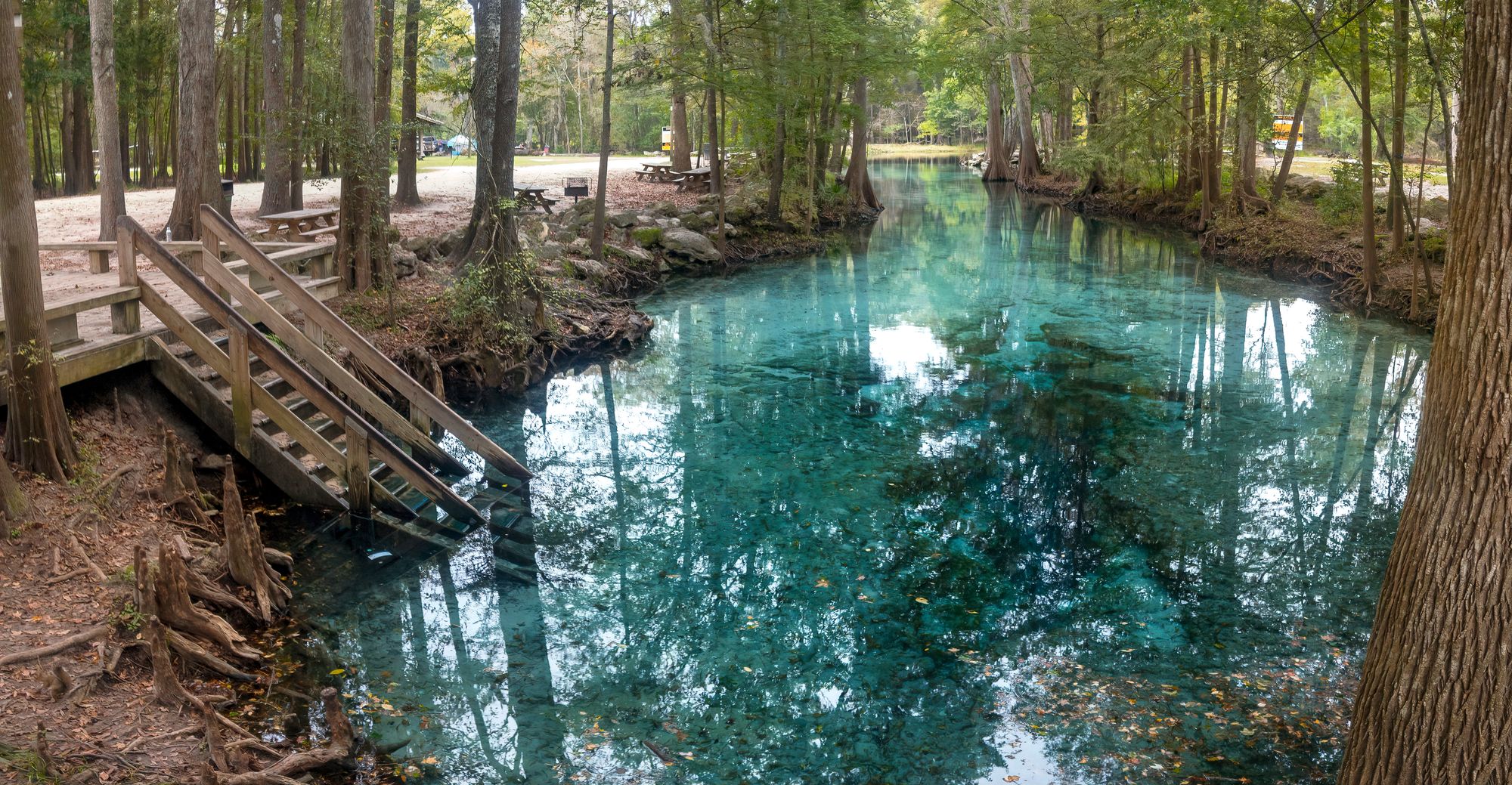
The water is the whole story. Ginnie Springs pushes out of the limestone at 72 degrees, every day of the year, and it is so clear that people floating on the surface photograph divers sixty feet below them like they're hanging in air. Videos of it go viral every summer, which is how a privately owned campground outside a town of a few thousand people became one of the most searched swimming holes in America.
Here's what the videos don't explain: how the place actually works, what it costs you in planning, and what changed recently.
The basics
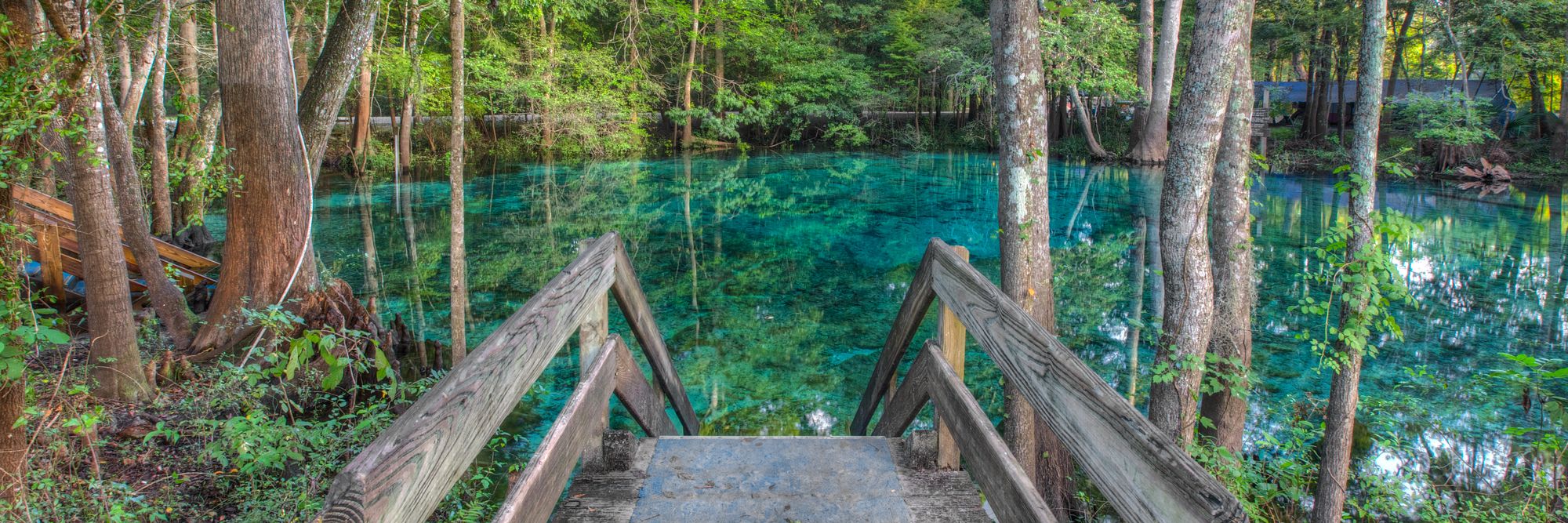
Ginnie Springs is a private park in High Springs, in north Florida about 40 minutes northwest of Gainesville. It is not a state park, despite what a lot of search results imply. The property sits on the Santa Fe River and holds a group of springs, with campsites, cabins, and river access spread through the woods around them.
Private ownership changes the experience in both directions. You get long hours, gear rental, and camping steps from the water, and you share it with a crowd that state parks would have capped hours earlier. Summer weekends are the busy version. If you've seen the phrase "spring break on a river," that's a Saturday in July. Midweek and shoulder-season visits are a different park entirely: quiet, green, and mostly yours.
Floating, swimming, snorkelling
The default Ginnie day is a slow float. You put a tube in the Santa Fe upstream, drift past the spring outlets, and pull out downstream, then walk back and do it again. The spring basins themselves are for swimming and snorkelling, and the snorkelling is the sleeper activity here: the visibility that makes the aerial photos famous is even better from inside the water.
Seventy-two degrees deserves a sentence of honesty. In July it feels like relief. In January it feels like a dare, at least for the first minute, and then like a hot spring compared to the winter river around it.
The cave diving
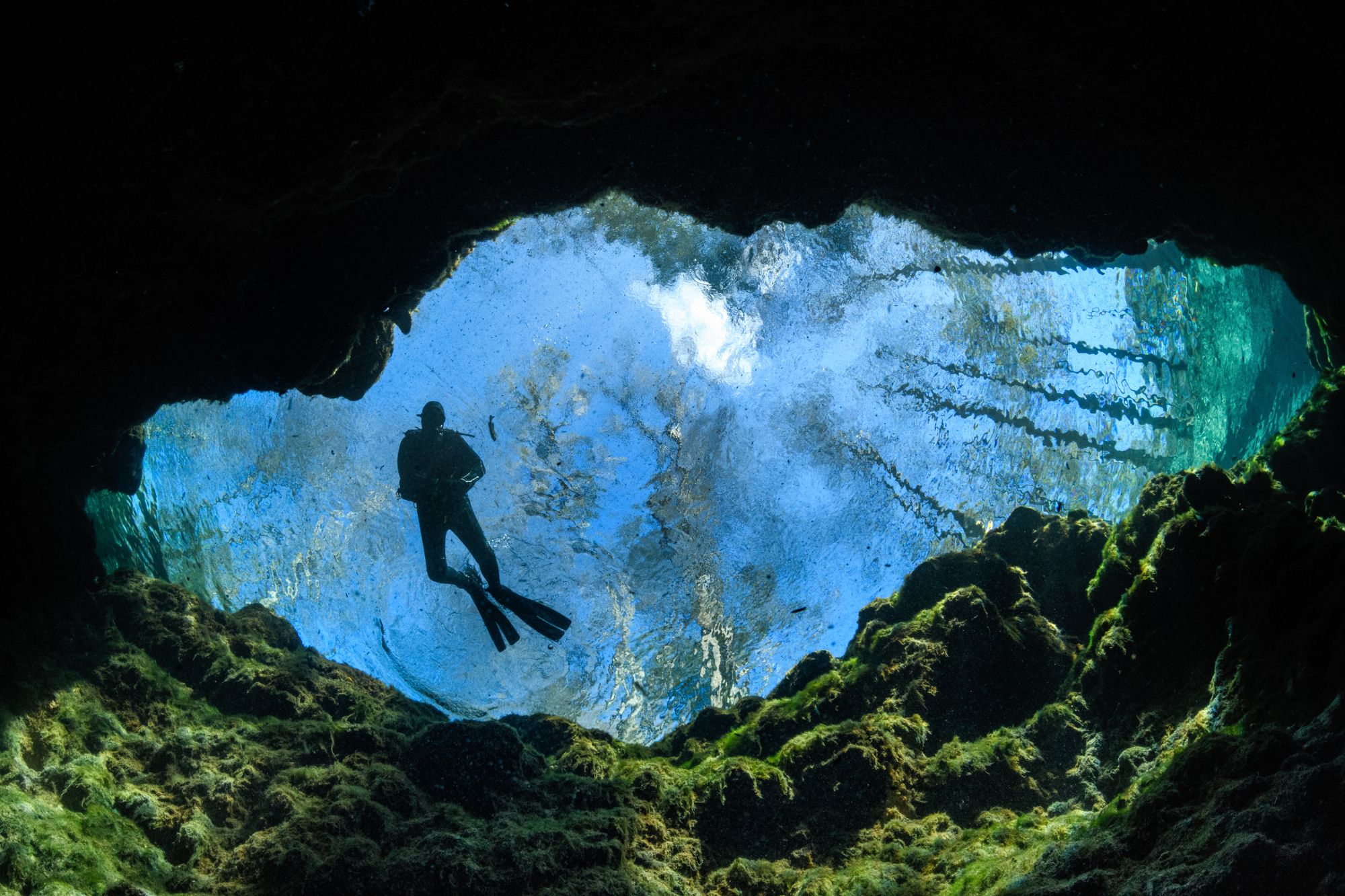
Ginnie's other reputation is underground. The spring system here draws certified cave divers from around the world, and on any given morning the parking area has dive flags from a dozen countries. If you're not cave certified, the caverns are strictly off the menu, and that rule has a body count behind it; open-water swimmers stay in the basins and get a spectacular show anyway, watching dive lights disappear into the rock.
Camping at Ginnie Springs
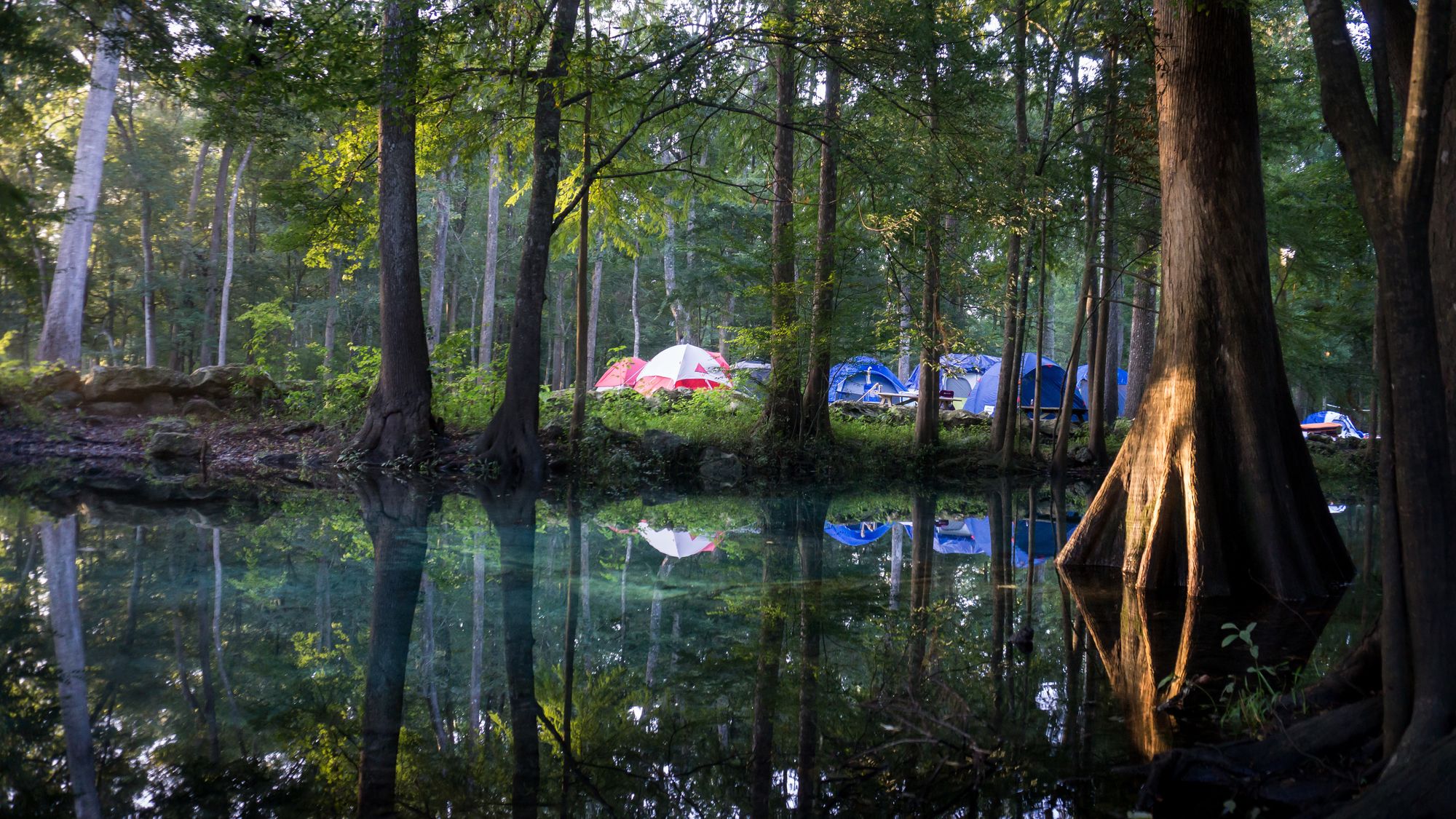
This is the part that makes Ginnie a trip instead of a day pass. The property has hundreds of campsites through the oaks and along the river, plus cabins, and staying overnight is how you get the springs in the early morning, before the day crowd arrives. That first hour after sunrise, with mist on 72-degree water and nobody in it, is the best argument for bringing an RV.
Two rules worth knowing before you book. Campers must be 18 or older unless accompanied by a parent or guardian, with ID checked. And the park introduced a new alcohol and open-container policy in April 2026, so if your mental image of Ginnie comes from older articles about coolers on the river, check the current rules on the park's site before you pack. The policy details are theirs to state, not ours to guess.
When to go
Summer is tubing season and crowd season, and they arrive together. Fall and spring get you warm air, the same water temperature, and much easier campsite availability. Winter is the local secret: the springs hold their 72 degrees while the air drops, the crowds vanish, and this stretch of north Florida is an hour from the winter manatee gathering at Blue Spring if you want to stack the two trips.
Getting there with an RV
High Springs is an easy drive from Gainesville, and the park roads and sites handle trailers and motorhomes without drama. If you don't own a rig, rent one nearby, or have it delivered and set up at your site so the only thing you drive is your own car. A trailer with air conditioning also solves the one real problem of a north Florida summer campground, which is 2 p.m. in August.
FAQ
Is Ginnie Springs dangerous?
The springs and river are calm, shallow-edged, and family-friendly by Florida swimming-hole standards. The genuine hazard is the cave system, which is why cave access is restricted to certified cave divers. The other thing people mean by this question is the crowd, and the honest answer is that summer weekends are loud and busy; go midweek if that's not your trip.
Are there alligators at Ginnie Springs?
This is Florida, and the Santa Fe is a natural river, so alligators live in the broader waterway like they do in most Florida rivers. The busy, clear spring areas aren't where they want to be. Follow posted guidance, keep an eye on quiet river edges, and treat wildlife distance as a rule rather than a suggestion.
Is Ginnie Springs a state park?
No. It's privately owned and operated, which is why the hours, rules, and pricing differ from Florida's state park springs. Book directly with the park; state park reservation windows don't apply here.
How much does Ginnie Springs cost?
Day and camping rates change seasonally, so check the park's current price page rather than a blog's screenshot of an old one. Budget for admission plus tube or gear rental if you're not bringing your own.

Team RVezy
Team RVezy is a group of RV enthusiasts who traverse the U.S. and Canada in our campervans, tiny trailers, and motorhomes. We love the open road and the feeling of having nowhere to go but everywhere.
View more posts